


| Issue |
Cah. Agric.
Volume 35, 2026
Réduire l’utilisation des pesticides agricoles dans les pays du Sud : verrous et leviers socio-techniques / Reducing the use of agricultural pesticides in Southern countries: socio-technical barriers and levers. Coordonnateurs : Ludovic Temple, Nathalie Jas, Fabrice Le Bellec, Jean-Noël Aubertot, Olivier Dangles, Jean-Philippe Deguine, Catherine Abadie, Eveline Compaore Sawadogo, François-Xavier Cote
|
|
|---|---|---|
| Article Number | 3 | |
| Number of page(s) | 9 | |
| DOI | https://doi.org/10.1051/cagri/2026001 | |
| Published online | 19 February 2026 | |
Article de recherche / Research Article
Practices and perspectives on the use of pesticides for post-harvest grain storage: evidence from Southeast Mexico
Pratiques et perspectives en matière d'utilisation de pesticides pour le stockage post-récolte des céréales : le cas du sud-est du Mexique
1
Centro de estudios Sociológicos, Universidad Nacional Autónoma de México, Mexico City, Mexico
2
CIRAD, UMR INNOVATION, Mexico City, Mexico
3
INNOVATION, Univ Montpellier, CIRAD, INRAe, Institut Agro, Montpellier, France
4
International Maize and Wheat Improvement Center (CIMMYT), Sustainable Agrifood System Program, Texcoco, Mexico
* Corresponding author: This email address is being protected from spambots. You need JavaScript enabled to view it.
Abstract
The issues surrounding the use of pesticides in food production prior to harvesting, are widely covered in the literature. Those relating to post-harvest practices are much less so, even though they are essential for food security and for the health of agricultural workers. In this study, we analyze the practices of small-scale farmers in Southeastern Mexico when storing maize grain, and examine their use of a reference insecticide, aluminum phosphide. We assess the reasons why farmers choose this technology, their sources of information, and their perceptions of the associated risks. The results show that practices vary in terms of doses used, application methods, exposure time, combination with other products, and grain cleaning after application. This variability results from a drastic lack of information available in rural communities regarding the correct use of pesticides. This lack is a consequence of a marketing system that is largely based on retail sales, with no instructions for use on packaging, and on village grocery sellers who are unaware of good practices and potential risks. Farmers systematically minimize the risks associated with pesticides, and believe they are protected from toxic side effects. These results suggest that rural development policies should focus on training farmers and input retailers, and on promoting alternative grain storage technologies.
Résumé
Les questions relatives à l'utilisation des pesticides dans la production agricole, avant les récoltes, sont largement couvertes par la littérature. Celles relatives aux pratiques post-récolte le sont beaucoup moins, alors qu'elles sont essentielles pour la sécurité alimentaire et pour la santé des travailleurs agricoles. Dans cette étude, nous analysons les pratiques des petits agriculteurs du sud-est du Mexique en matière de stockage des grains de maïs, et examinons leur utilisation d'un insecticide de référence, le phosphure d'aluminium. Nous évaluons les raisons pour lesquelles les agriculteurs choisissent cette technologie, leurs sources d'information, et leur perception des risques associés. Les résultats montrent que les pratiques varient en termes de doses utilisées, de méthodes d'application, de temps d'exposition, de combinaison avec d'autres pesticides, et de nettoyage des grains après l'application. Cette variabilité résulte d'un manque drastique d'informations disponibles dans les communautés rurales concernant l'utilisation correcte de ces pesticides. Ce manque est la conséquence d'un système de commercialisation largement basé sur la vente au détail, sans mode d'emploi sur les emballages, et sur les vendeurs des épiceries de village ignorant les bonnes pratiques et les risques potentiels. Les agriculteurs minimisent systématiquement les risques liés aux pesticides et se croient protégés des effets secondaires toxiques. Ces résultats suggèrent que les politiques de développement rural devraient se concentrer sur la formation des agriculteurs et des vendeurs d'intrants, et sur la promotion de technologies alternatives pour le stockage des grains.
Key words: postharvest / grain storage / pesticide / inputs retailers / risk perception
Mots clés : post-récolte / stockage des grains / pesticides / vendeurs d'intrants / perception des risques
© R.E. Pérez Flores et al., Hosted by EDP Sciences 2026
 This is an Open Access article distributed under the terms of the Creative Commons Attribution License CC-BY-NC (https://creativecommons.org/licenses/by-nc/4.0), which permits unrestricted use, distribution, and reproduction in any medium, except for commercial purposes, provided the original work is properly cited.
1 Introduction
Reducing pesticide use in agricultural production is a major challenge, as these technologies continue to be used on a massive scale for various reasons. They are an essential part of the dominant socio-technical systems in agriculture, with clear path-dependency effects (Cowan and Gunby, 1996). Pesticides are defended by the agrochemical industry and influential stakeholders in value chains, arguing for the permanence of these technologies (Shattuck, 2021; Sherwood and Paredes, 2014). Farmers, for their part, find a range of benefits and refer to different rationales for using these technologies (Pedersen et al., 2012). For example, they reduce their workload and avoid taking risks that could jeopardize their harvests and incomes (Wilson and Tisdell, 2001; Lagerkvist et al., 2012). Their professional identities and commitment to high crop yields are largely based on the use of these products (Bell et al., 2015). Moreover, they often minimize the negative impact that these substances can have (Chèze et al., 2020), and are not properly informed about them. This is especially true for smallholders in low- and middle-income countries, who are poorly informed about good pesticide-handling practices (Mengistie et al., 2017).
The use of pesticides in pre-harvest agricultural practices is relatively well documented; however, their use in postharvest practices remains poorly described, scarcely analyzed, and in some cases, virtually unknown (Adejumo et al., 2014). Postharvest refers to the set of technologies and processes used in the handling of agricultural products from harvesting until consumption to prolong shelf life and maintain quality (Odjo et al., 2022). Farmers' practices at these postharvest stages are essential, particularly during storage, to minimize losses caused by insects and other pests. In low- and middle-income countries, during the grain storage phase, farmers are estimated to incur losses of 20-50%, depending on crop and production conditions (Kader, 2013). Of this percentage, still with grains, it is estimated that insects are responsible for between 5 and 20% of the losses (Jayas, 2024), explaining the extensive use of insecticides during the storage phase. Initiatives exist to reduce the consumption of these chemicals by developing alternative postharvest technologies (Bokusheva et al., 2012), particularly hermetic storage systems (Ibro et al., 2014). In addition, efforts are underway to revise international regulations. Following the signing of the Montreal Protocol (1987), methyl bromide, one of the most widely used fumigants and considered the most efficient for storage, was banned in several countries due to its effects on the ozone layer (Nayak et al., 2020). A similar case occurred with the organophosphate pesticide malathion, which in the 1970s was the most widely used storage chemical. Its use is currently restricted in several countries owing to its high toxicity, through ingestion, inhalation and skin contact, with acetylcholinesterase inhibition and potential neurological effects and carcinogenicity. However, there are currently 16 molecules used for postharvest, of which aluminum phosphide (AlP)–a solid insecticide whose commercial presentation is in tablet form, with outstanding effectiveness in combating pests such as grain borers, weevils, bruchids, moths and flour beetles–is the dominant one (FAO, 1989; Jayas, 2024). Nevertheless, its use is surrounded by major issues (Saini and Kaushik, 2021). When exposed to moisture, AlP releases a gas called phosphine; immediate effects of exposure may include respiratory tract irritation, neurological and cardiac damage, which can lead to death (Sulaj et al., 2015). In addition, the development of resistance by the target insects was observed, because of inadequate dosing and use practices (Ramya et al., 2023).
The aim of this study was to fill the knowledge gap regarding the use of pesticides by farmers in postharvest phases and, more specifically, during grain storage during which insecticides are heavily applied. What uses are made of pesticides for grain storage and conservation and how do these technologies compete or coexist with other practices? What information do farmers rely on in their technical choices and their use of pesticides, and how do they relate to the risks associated with these technologies? We answer these questions based on research carried out with small-scale farmers in Southeast Mexico and, more broadly, with the various stakeholders involved in the marketing of the pesticides concerned. Although there is a trend towards abandoning maize cultivation due to low market prices, increased imports, and climatic problems that exacerbate pests pressure (Altieri and Nichols, 2009), there is still a sector of farmers for whom grain storage is important, both for sale and for self-consumption. For these small farmers in Mexico and their counterparts worldwide, the use of insecticides, particularly AlP, remains essential.
The remainder of this paper is organized as follows. First, the materials and methods used in this study are described. The results section is then structured into three parts: (1) a diagnosis of the practices of the farmers surveyed, recounting the uses of pesticides and of AlP in particular, for grain storage, (2) an examination of the ways farmers purchase these technologies, and how their commercial contacts influence or do not influence their practices, and (3) farmers' attitudes to risk in relation to the use of pesticides, highlighting the subjective immunity they develop towards these technologies and the risks they entail. Finally, we conclude by formulating avenues for public policy and further research.
2 Material and methods
We conducted qualitative research based on 65 interviews with farmers in three states in Southeast Mexico (43 in Chiapas, 22 in Yucatán and Quintana Roo) We also interviewed 16 agrochemical retailers, grocery shop owners, and four grain warehouse workers. Most of them were men over 30 years old who reported carrying out some form of pest management during the storage phase of maize and beans. Two hospitals were also visited, one in Yucatán-Quintana Roo and one in Chiapas, to obtain data on phosphine poisoning.
Most of the interviews were conducted in Chiapas, which features a high usage rate of AlP, focused on Los Altos (Bernardino Hernández et al., 2017), because of its high production of grain and prevalence of pests (Odjo et al., 2020). Quintana Roo is characterized by low grain productivity and self-consumption of local varieties, perceived by the interviewed farmers as more resistant to pests than hybrid maize. In Yucatán, interviews were conducted in the municipalities of Felipe Carrillo Puerto, in the east (Tzucacab, Oxcutzcab, and Peto) and in the north (Tizimin and Dzonot Carretero). It is an area with warm and sub-humid climatic conditions where citrus, sisal, maize, and various vegetables are produced. Northern Yucatán is mainly a livestock farming area; therefore, AlP is largely used in warehouses and storage areas.
In Chiapas, four areas were surveyed. The Soconusco region, with a tropical climate, is an important agricultural area with fruit, coffee, and maize production, generally for self-consumption. It is a very humid area that favors the emergence of pests. The regions of Los Llanos, Los Altos, and La Frailesca were visited; the latter was considered “the granary of Chiapas” for its high-volume production of hybrid maize. These three regions are adjacent, maintain similar climatic and production conditions, and are suitable for large-scale sowing, harvesting, and storage of cereals, mainly for commercialization. Owing to these similarities, we refer to the interviews conducted in this area as Los Altos.
The overall objective of the interviews was to explore the practices of using AlP and other storage methods among small-scale maize and bean farmers in the study area. We also sought to identify the type of information available to each stakeholder group regarding storage methods, agrochemicals, and the conditions and perceptions of exposure to the risks of poisoning.
Direct interviews with 51 farmers were conducted in agrochemical shops, public squares, and cultivation areas. A focus group with 14 farmers in the municipality of Villaflores (Chiapas) was also conducted using the same semi-structured questionnaire. For retailers and warehouse workers, the 16 interviews were conducted in their workspaces, with a focus on ethnographic observation of their interactions with tablets and other chemicals.
Contact with farmers in Yucatán, Quintana Roo, and the Soconusco region was made randomly using the 'snowball' technique (Parker et al., 2019), once contact was made with different people. For the Highlands area, we received support from a CIMMYT (International Maize and Wheat Improvement Center) staff member, who facilitated logistics and contacts to carry out the interviews and manage the dynamics of the focus groups. Of the 43 interviews conducted in Chiapas, 30 were conducted in this region.
Medical personnel from the General Hospital of Felipe Carrillo Puerto, Quintana Roo, were also interviewed to discuss pesticide poisoning in the region. Interviews were conducted with the Health Services Coordinator, a nurse, and other medical staff who were present in the room at the time. The Hospital de las Culturas in San Cristóbal, Chiapas, was also visited; however, requests for interviews and information were not approved.
Once the information was obtained, the main phrases and arguments given by the interviewees were transcribed and systematized by classifying them into the following categories: subjective immunity and underestimation of risk, precautionary position in the face of hazards, technical advice, perceptions of health personnel, use of other chemicals, and use of non-chemical methods.
3 Results
3.1 Farmers' practices and their determinants
Of the 65 farmers surveyed in the three states, 41 (63%) used chemical insecticides to treat grains stored after harvest (Fig. 1).
Among the twenty-four farmers who didn't use chemical insecticides, seventeen used traditional preventive methods based on sun exposure, lime, or plants, and seven used hermetic storage technologies. The former group presented a range of arguments to justify their choices. Some farmers in Yucatan produce maize landraces which, according to them, are less susceptible to pests than hybrid seeds and can be preserved through sun drying and a decrease in moisture content. Other farmers, mainly in Chiapas, who sun-dry or treat their grains with lime, neem, pepper, or other plant extracts, have stopped using AlP due to personal experiences with poisoning or diseases such as cancer, or because they perceive differences in the taste and cooking time of the treated grains. In the case of farmers using hermetic storage methods, such as hermetic metal silos, hermetic bags, or sealed plastic bottles, they reported a significant reduction in losses.
Of the 41 farmers who used chemical insecticides, 30 used AlP tablets, 25 used them exclusively, and 5 combined them with other insecticides (mainly malathion or terbufos) (Fig. 2). As a result, 44% of the farmers in the total sample used tablets and 37% used them exclusively. This percentage is even higher in Chiapas, a region characterized by high relative humidity and temperature, and high storage pest pressure, with 70% of the 30 farmers surveyed using the tablets.
Three main methods were used to apply the AlP tablets (Fig. 3).
The first method, reported by eight farmers, involves placing one or two tablets in 50 kg sacks sealed inside thick plastic bags. A tablet wrapped in a porous material (cardboard, cloth, or a bag with holes) is then placed inside, sealed, and covered with polypropylene sacks. The gas is left to act for periods varying from one night to one week. The sacks are ventilated before use.
The second method, carried out by 15 people, involved applying the tablet, wrapped in porous material, directly to the grain, either in bags, sacks, or non-airtight containers. The dose usually ranges from a quarter of a tablet to three tablets per 50 kg sack. After application, the container is sealed, and upon opening, it is left to ventilate for a period ranging from one day to several months before consumption. Three people reported washing the grain before eating, as pesticides leave residues that alter food taste. Some even reported that animals do not want to eat grains treated in this manner.
Seven farmers used the third method, which involves stacking sacks. This includes arranging several sacks into piles to form a square on a wooden pallet. The amount of grain varied among interviewees, ranging from 200 kg to one ton per stack. Each was then covered with polypropylene tarpaulin and left to act for two–three days. Finally, it is ventilated prior to use. This technique is more common on large farms because it is feasible to stack sacks in closed spaces.
These three methods show considerable variability at several points: exposure time, which ranges from one night to one week (variability by a factor of 14); doses applied, which can vary from one tablet per 200 kg to one tablet per 17 kg (variability by a factor of 12); ventilation time after application, ranging from one day to three months (variability by a factor of 90); and whether grains are washed or not with soap and water. Finally, it should be noted that, in addition to this variability, there is also variability in whether the product is mixed with other chemicals, which is usually the case in Chiapas. Some farmers believe that the addition of another product provides prolonged protection; this practice is effective in the case of malathion, while terbufos seems to be gradually abandoned because of the strong odor it leaves on the crop.
Once we have established this wide variability, we need to understand its origins. To do this, we need to examine the sources of the knowledge and prescriptions used by farmers. In particular, the role of actors who sell these products to farmers has attracted our attention.
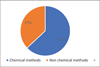 |
Fig. 1 Proportions of chemicals and non-chemicals methods used by farmers. Proportions de méthodes chimiques et non chimiques utilisées par les agriculteurs. |
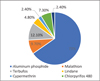 |
Fig. 2 Types of chemicals pesticides used by farmers. Types de pesticides chimiques utilisés par les agriculteurs. |
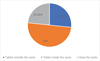 |
Fig. 3 Methods of application of aluminum phosphide tablets. Modes d'application des tablettes de phosphure d'aluminium. |
3.2 Access modalities and shortcomings in technical advice
One reason for the success of AlP tablets with smallholder farmers in Southeast Mexico is ease of access. It is low-cost, with prices generally around US$2.50 per tube of 20 tablets. It is easily available in agrochemical and agroveterinary shops, as well as in grocery shops, where it is found in contact with other chemicals and open foodstuffs, such as vegetables, fruits, and animal feed. Because of the high demand in Chiapas, it is mainly sold in jars of 320 to 500 tablets.
From there, it is supplied to small villages, sold to farmers in jars or tubes. Periods of scarcity are common at certain times of the year due to increased demand. The product is also readily available on e-commerce platforms. On one of these platforms, the description given makes it unequivocally essential for farmers with no contraindications. It is presented as “a silent hero”, a “powerful ally”, which “effectively combats undesirable invaders” and is “easy to use and incredibly effective”, offering an “accurate control” and “an effective and ruthless solution.” As for potential risk, this is ruled out because “aluminum phosphide tablets are designed with scientific precision to deliver lethal but safe fumigations.”
Despite the ease with which tablets are available and these announcements dismiss any risk or inconvenience, interviews revealed that very little information is communicated to users about toxicity, whether for smallholder farmers or grain collection and storage companies. The packaging on AlP boxes carries warnings such as a red logo alerting consumers to their toxicity, but in rural communities, tablets are usually sold to smallholder farmers in loose tubes, without packaging and its warnings or application information. Most farmers then turn to agricultural input vendors or grocery shops for usage instructions. However, the information received is often incorrect and incomplete.
During the interviews with salespeople, shop owners, and grain store workers, we observed that most of them did not know or follow the instructions recommended by the manufacturers. In many shops, the amounts and methods of application are not standardized but are tailored to each user's needs, and recommendations are based more on what they intuitively know, have seen, or have experienced firsthand as users. Of the 16 retailers interviewed, only two referred to the amount recommended by manufacturers and by the experts from the Food and Agriculture Organization of the United Nations (FAO) and the World Health Organization (WHO) (FAO/WHO, 1967), of three to six tablets per ton, with a sack dunnage (Mexican authorities recommend a quantity of 3 grams of phosphine per cubic meter of grain, or approximately 3 tablets/m3 (SAGARPA and SENASICA, 2016). In the case of maize, with an average moisture content of 13% for storage, this recommendation is equivalent to 4 tablets per ton, which is approximately the median value of the recommendation made by manufacturers.). In rural shops, farmers are advised to use one or up to three tablets per 50 kg sack. Three of the interviewees stated that the tablet should be applied directly to maize, negating or minimizing the possibility of contamination. Retailers frequently mentioned the afternoon as the best time for fumigation to avoid the effects of heat on phosphine, although this is not always known to farmers. It is also advised, in vain, not to apply near domestic spaces and ventilate for at least one day after fumigation. References to protection during application and ventilation were almost nonexistent. Regarding the use of other agrochemicals, four interviewees suggested deltamethrin, alphacypermethrin, and malathion. The latter is often presented by these vendors as 'less toxic' and 'more effective' because of the longer protection time it offers.
While most shops offered some advice on its use, albeit inaccurate, we found some rural shops where vendors did not know how to use it. One of them said, “The truth is that I don't know how to use it, but the people in the villages themselves know how to use it and tell you”, instead of acknowledging their lack of information by mentioning people's specialized knowledge. In fact, one farmer spoke of this lack of information on the part of vendors, forcing her to seek advice from her neighbors, leading her to sometimes deviant practices:
“In the shop, they sell it to you. They do not explain it to you [...]. Before, my dad used to use lime on the maize folded, but now the pests are more resistant [...]. My neighbors also use the tablets. They taught me how to use them. They have even recommended that I open the sacks before a year has passed and put another tablet on them to tie them up, because they only last a few months.”
A taxi driver we met in one of the communities, whose wife runs a small local grocery store, confirms the idea that knowledge is on the side of users and not on the side of small general merchants:
“My wife has a grocery shop, and we have been selling chemicals. They sell well because there are hardly any in the village and you have to go to the city to get them [...]. We do not know how to use it, we sell it like this and among the people they already know [...]. If they ask for it, we sell it individually.”
Although some of the vendors we met were unfamiliar with the application protocols or could not offer specific recommendations to farmers, they acknowledged the dangers associated with using these products. A young boy working in a village grocery shop, when asked about the potential sale of tablets in his shop, asked us, in a low voice, how much we wanted to buy, saying “that's very poisonous. I'd sell you the kind I use, but you'd better not put it there yourself”, offering us a tube of AlP tablets. Even though they sometimes claim to be aware of the risks or try to raise farmers' awareness of them, sales staff report encountering limited receptiveness and interest among farmers: “The truth is that I do think it hurts and you have to protect yourself, but it's up to each one of us.” Another older salesperson emphasized the influential role that sales representatives can play in advising farmers, while also acknowledging their own lack of technical knowledge, which in turn perpetuates farmers' limited understanding of the issues:
“I give advice to people from the villages because we are rural educators and vendors. However, there is a lack of technical training. In addition, people tend to minimize the damage caused by pesticides. They do not want to protect themselves and do not follow instructions properly.”
The lack of knowledge and training among vendors and users concerns both good practice in the use of AlP tablets and the risks that may be associated with dangerous practices. In the next section, we discuss the latter.
3.3 Subjective immunity, risk minimization and invisibility in health care institutions
The lack of knowledge about the toxicity of AlP leads users to minimize the possibility of being exposed to harm and, thus, consider the need to protect themselves to be of little relevance. This everyday underestimation of risk exposure is defined as subjective immunity (Douglas, 1986). Subjective immunity, as a process of normalizing risks, generates a false idea of self-control; it even implies that a person's body no longer alerts them to dangerous situations. According to a report by the National Institute for Occupational Safety and Health (NIOSH, 1999), after prolonged exposure to AlP, workers develop olfactory fatigue, in which they no longer notice the smell of rotten fish or garlic that phosphine gas emits as it is released. The same is true for other symptoms they may experience, such as headache, dizziness, or skin irritation.
Of the 38 interviewees who regularly used AlP tablets (30 farmers, four workers in rural shops, and four in warehouses and stores), only six persons referred to using masks, gloves and other personal protective equipment, when fumigating or ventilating treated grain. The remaining respondents, for various reasons, considered that the danger is either unreal or is not significant enough to warrant special safety precautions. Cultural dimensions, particularly those linked to gender, play a part in this distancing from risk, as pointed out by an agrochemical retailer, who is himself a user of the tablets:
“If you are going to throw it out (referring to the tablet), use a glove or a bag. Nothing happens to us, men. We throw it out straight away, because we are rustic. We have dirty hands, and dirt protects us. You have to be careful not to breathe it.”
The prevailing belief is that male farm workers must be strong and resilient when working in physically demanding contexts. As a result, it is normalized not to use personal protective equipment when applying pesticides, as doing so may be seen as a sign of weakness or lack of masculinity. In the absence of protection at the time of treatment, precautions were taken before the grains were eaten to avoid the persistence of odors or an unpleasant taste in the maize:
“The tablet doesn't harm. It's like anything else, if it's a poison, but you rinse your maize grain before you eat it, wash it with soap, and that is it. You do not need to protect yourself when you throw it out. Just like that.”
Users also often reassure themselves that AlP is less harmful than other products, such as herbicides (e.g., paraquat) commonly applied to fruit crops. However, expressions of concern about the dangerous or unpleasant nature of these products are frequent, reflecting a certain awareness of their potential risks or, at the very least, of some associated inconvenience. For example, some farmers avoid using AlP on the portion of the grain intended for household consumption, reserving it instead for grain destined for sales. A farmer testifies:
“This attracts many green flies. They come, but it kills them [...]. The residue that remains is a grey ash that we sweep up the next day and throw in the rubbish, because if water gets on it, it becomes active again. It smells very bad.”
Other respondents pointed out that animals refuse to eat the treated grain because of unpleasant odors. The tablets have also been used for suicides, with four cases reported by farmers in Chiapas. In some regions, it is known as the “love tablet”, regarding suicides allegedly caused by the break-up of a relationship. However, when people talk about it, they associate the toxicity of the pill with voluntary poisoning events but often not with the real possibility that any significant harm could come to them from exposure. This is reinforced by the lack of personal experience of poisoning that prevails (“nothing has happened to me so far. I don't think it does any harm”, as one farmer said), or a lack of direct contact with cases of poisoning. They talk about their doubts about any warnings they may receive, such as the danger labels on packaging, for example: “There is a warning on the packaging, but it is not so toxic.” While there is sometimes doubt, the low cost of tablets combined with their perceived effectiveness means that users do not consider other options, regardless of the risks:
“Maybe it is bad, but I think that nothing is going to happen. Perhaps I would like to use something else, but the pill is practical. Because I am lazy, I do not take care of myself, and I prefer to use what I know.”
Thus, there is a tradition of use and internalized practices that hinder risk awareness. Users see the tablet as an inexpensive technological solution that works for their neighbors or friends, and therefore feel confident about using it, both because of its efficacy and its apparent harmlessness. By naming it “the tablet to cure maize”, colloquial language demonstrates the cultural association between a technology and its ability to heal infested grain. By living with its daily use, sometimes within the household, farmers normalize it as the most appropriate technology for addressing postharvest pest problems. Therefore, to inform their practices, they resort to empirical reasoning, what has worked for them, rather than to technical reasoning, which they do not always feel familiar with. One farmer said: “We don't feel that it leaves residues. Maybe we are used to it.”
We found only the testimony of a worker from a chemical shop in Quintana Roo, who said he had first-hand knowledge of a case of poisoning of a worker in a warehouse who had almost died. Workers in these storage facilities, who are exposed to the product all day, are particularly at risk. Among these workers, awareness of the risk exists, but with no change in practice, as one worker in Chiapas points out:
“We do not protect ourselves. We know that we should, but we are stubborn. We felt itchy eyes and itchy skin. When we get home, we take a bath, but we still smell the odor.”
This change in practice is not encouraged by workers' employers, adding to the feeling that it is a secondary problem that does not require attention. In this way, subjective immunity is constructed under chains of responsibility among distributors, technicians, marketers, and, finally, among users who socialize incorrect practices when using AlP because they do not consider them problematic. They place themselves under a threshold of risk-taking, from which they make decisions based on practical reasoning that allows them to make calculations, negotiate meanings of their relationship with the pesticide, and generate routines they define as appropriate (Zinn, 2018). In addition to efforts aimed at minimizing risks within households or workplaces, there is also the persistent invisibility of pesticide poisonings and their effects within public health institutions. In general terms, Mexico lacks reliable statistics, records, or data on the relationship between farmers and the use of pesticides. This hinders accurate assessment of the magnitude of problems associated with poisoning, unsafe handling practices, and chronic exposure among rural populations. Consequently, it is primarily academic and activist sectors that have taken on the task of documenting these issues (García et al., 2018). Interviews with medical personnel in the study area confirmed the lack of protocols, training, and general awareness on how to manage pesticide poisoning. According to the health services coordinator at a local hospital, such incidents are often misdiagnosed as gastrointestinal or neurological disorders. There are no established care protocols to isolate patients poisoned with pesticides from other patients, nor are laboratory facilities available to determine the causes of poisoning. When patients arrive, they or their relatives are asked to fill out a form indicating the presumed cause. Yet no subsequent medical follow-up occurs, and these records are frequently misplaced, rendering epidemiological surveillance practically nonexistent.
4 Discussion and conclusion
Grain storage and conservation practices are essential to avoid compromising farmers' food security. In this study, our aim was to fill the knowledge gap surrounding the use of pesticides in postharvest practices. Although there is abundant literature on the use of pesticides in the pre-harvest stages, the conditions and motivations for their use by smallholder farmers, the sources of knowledge they draw on, and their relationship to the risks associated with the use of these technologies in the postharvest stages remain unexplored. Based on a study conducted in the maize growing region of Southeastern Mexico, our results confirmed the predominance of chemical insecticides over other conservation methods, whether traditional or linked to hermetic storage technologies. They also confirm that among the chemical solutions used, AlP is predominantly sold in tablet form, without restriction, by retailers in agricultural inputs or village grocery shops. We have also shown that the methods of application of these AlP tablets and postharvest insecticides are extremely variable. This great variability is attributable to farmers' ignorance of the correct doses and officially recommended application practices. In turn, this situation can be attributed to the limited knowledge of those selling these tablets in rural communities, even though they often serve as the primary source of information for smallholder farmers on the margins of public agricultural extension systems. This lack of knowledge among farmers and vendors is also reflected in their limited awareness of the health risks associated with these practices. It contributes to a sense of subjective immunity among users who perceive themselves as protected by cultural representations that combine gender norms with a tendency to minimize risks. Such unawareness of health hazards is further reinforced by the invisibility of pesticide poisoning within public health records and institutional practices.
These results confirm the importance of paying attention to pesticide use practices, as they can pose a danger to the health of farmers, household members, and consumers. They also invite the conclusion that, in the context of small-scale farming in low- and middle-income countries, the motivations and conditions underlying the use of pesticides for post-harvest grain conservation are not fundamentally different from those that prevail during the pre-harvest phase (Lagerkvist et al., 2012). The main specificity lies in the fact that storage is most often carried out within residential premises, thereby reinforcing in two distinct ways the domestic nature of pesticide uses and the associated risks. First, AlP tablets are sold in village grocery stores alongside other everyday consumer goods, by vendors who are generally unqualified. Second, because grain storage occurs within household units and often involves poor handling practices, the risk of exposure extends to all household members.
These elements provide food for discussions on future research and for decision-makers and agents responsible for designing and implementing public policies. First, we need to look at ways to train farmers, retailers, and all stakeholders involved in these technologies in the best practices for using these tablets. Retailers are key players with whom farmers are systematically in contact, but whose level of training remains well below what is required. They are forgotten players in rural development policies and in research on agricultural knowledge and innovation systems (Klerkx et al., 2012), who prefer to rely on traditional agricultural extension agents. They could be mobilized for their strategic position in contact with farmers and, therefore, for their potential capacity to guide the latter's practices. Recent studies have shown that they can play a crucial role in promoting technologies that offer alternatives to chemical inputs, although they often remain on the margins of the production and circulation of up-to-date agricultural knowledge (Goulet et al., 2025). In that respect, their integration into training programs on sustainable agricultural practices, and a better understanding of their actions and interactions with farmers, could open new avenues for understanding and transforming how farmers consider the use of pesticides. In the future, AlP manufacturers should also be considered in the context of coordinated action by public authorities and agricultural research-development (R&D) operators to promote better use of this technology. For example, they should be made aware of the need to develop new methods of application that enable more predictable dosing and new packaging methods that support visible use.
Raising the profile of potential dangers among users and retailers could also involve low- and middle-income governmental departments capable of producing and collecting epidemiological data on poisoning by AlP and, more generally, by pesticides. Interviews with farmers, retailers, and health professionals revealed that knowledge of cases of voluntary or involuntary poisoning was diffuse and imprecise. Exploratory interviews with health services in the survey areas revealed the absence of systematic collection of epidemiological data on these subjects, making them invisible to public health players. As it is difficult to deviate farmers and rural stakeholders from historical practices only on the basis of sustainability concepts (Sherman and Gent, 2014), it is on the basis of the collection and formalization of this evidence that awareness campaigns in rural communities could be envisaged. We have indeed observed that awareness of the risks associated with pesticide use has played an important role in some farmers' decision to adopt alternative methods of grain conservation. However, making these risks visible will not be enough to ensure the promotion of good practices and even less to stimulate a genuine technological transition. The desired decline of a technology or, more broadly, of initiatives in favor of sociotechnical transitions (Geels and Schot, 2007), can only be envisaged through the parallel development of alternative technologies, as shown in the case of pesticides in agricultural production (Goulet, 2022). As an extension of efforts already underway, the promotion of alternative technologies based on hermetic storage (Odjo et al., 2020) and the demonstration of the effectiveness of traditional methods could, for example, be combined with efforts to raise awareness of the risks associated with the dominant technologies. An interdisciplinary approach, at the interface between public health and agriculture and through close links with public policies and private stakeholders, could help resolve the problems associated with the postharvest misuse of pesticides.
Acknowledgments
The authors are grateful to the participants of this study and the CIMMYT colleagues who facilitated data collection and the paper editing.
Funding
The research presented in this paper received financial support from the Project "Cultivos para México/MasAgro Productor", funded by SADER/SAGARPA, Mexico; the project “Seguridad alimentaria y nutricional para comunidades rurales del estado de Quintana Roo” funded by the Quintana Roo State Government, Mexico; the project BIS funded by Agence Nationale de la Recherche, France (ANR-24-CE41-5390) and the CGIAR Initiatives Plant Health and AgrilAC Resiliente with support from W1&W2 donors, including national governments, foundations, development banks, and other public and private agencies. Any opinions, findings, conclusions, or recommendations expressed in this publication are those of the authors and do not necessarily reflect the views of the donors previously mentioned.
References
- Adejumo OA, Ojoko E, Yusu SA. 2014. Factors influencing choice of pesticides used by grain farmers in Southwest Nigeria. J Biol Agric Healthc 4(28): 31–38. [Google Scholar]
- Altieri MA, Nichols C. 2009. Cambio climatico y agricultura campesina: impactos y respuestas adaptativas. LEISA revista de agroecologia 4: 5–9. [Google Scholar]
- Bell SE, Hullinger A, Brislen L. 2015. Manipulated masculinities: agribusiness, deskilling, and the rise of the businessman-farmer in the United States. Rural Sociol 80(3): 285–313. https://doi.org/10.1111/ruso.12066. [Google Scholar]
- Bernardino Hernández HU, Mariaca Méndez R, Nazar Beutelspacher A, Álvarez Solís JD, Torres Dosal A, Herera Portugal C. 2017. Los plaguicidas altamente peligrosos en Los Altos de Chiapas. In: Bejarano González F, ed. Los plaguicidas altamente peligrosos en México. Red de Acción sobre Plaguicidas y Alternativas en México, A. C. (RAPAM). pp. 263–278. [Google Scholar]
- Bokusheva R, Finger R, Fischler M, Berlin R, Marín Y, Pérez F, et al. 2012. Factors determining the adoption and impact of a postharvest storage technology. Food Secur 4(2): 279–293. https://doi.org/10.1007/s12571-012-0184-1. [Google Scholar]
- Chèze B, David M, Martinet V. 2020. Understanding farmers' reluctance to reduce pesticide use: a choice experiment. Ecol Econ 167: 106349. https://doi.org/10.1016/j.ecolecon.2019.06.004. [Google Scholar]
- Cowan R, Gunby P. 1996. Sprayed to death: path dependence, lock-in and pest control strategies. Econ J 106(436): 521–542. https://doi.org/10.2307/2235561. [Google Scholar]
- Douglas M. 1986. Risk acceptability according to the social sciences. New-York (USA): Russell Sage Foundation, 122 p. http://www.jstor.org/stable/10.7758/9781610441582. [Google Scholar]
- FAO/WHO. 1967. Pesticide residues in food – evaluation. Monograph V067 PR19. Rome (Italy): Food and Agriculture Organization/World Health Organization, 43 p. [Google Scholar]
- FAO. 1989. Prevention of post-harvest food losses: fruits, vegetables and root crops. A training manual. Rome (Italy): Food and Agriculture Organization. https://www.fao.org/4/t0073e/t0073e00.htm#Contents. [Google Scholar]
- García J, Leyva J, Martínez I, Hernández M, Aldana M., Rojas A, et al. 2018. Current status of pesticide research in Mexico. Int J Environ Pollut 34: 29–60. https://doi.org/10.20937/RICA.2018.34.esp01.03. [Google Scholar]
- Geels FW, Schot J. 2007. Typology of sociotechnical transition pathways. Res Policy 36(3): 399–417. https://doi.org/10.1016/j.respol.2007.01.003. [Google Scholar]
- Goulet F. 2022. The role of alternative technologies in the enactment of (dis)continuities. In: Koretsky Z, Stegmaier P, Turnheim B, van Lente H, eds. Technologies in decline: socio-technical approaches to discontinuation and destabilisation. London (UK): Routledge. pp. 167–184. https://doi.org/10.4324/9781003213642-7. [Google Scholar]
- Goulet F, Ortega Landa R, Buenrostro F, Fonteyne S. 2025. Can agrodealers be agents of sustainability transitions in Agriculture? Reflections based on the expansion of biological inputs in Mexico. J Rural Stud 120: 103838. https://doi.org/10.1016/j.jrurstud.2025.103838. [Google Scholar]
- Ibro G, Sorgho MC, Idris AA, Moussa B, Baributsa D, Lowenberg-DeBoer J. 2014. Adoption of cowpea hermetic storage by women in Nigeria, Niger and Burkina Faso. J Stored Prod Res 58: 87–96. https://doi.org/10.1016/j.jspr.2014.02.007. [Google Scholar]
- Jayas DS, ed. 2024. Control and management of pests in stored products. Boca Raton (USA): CRC Press, 683 p. https://doi.org/10.1201/9781003309888. [Google Scholar]
- Kader AA. 2013. Postharvest technology of horticultural crops - an overview from farm to fork. Ethiop J Appl Sci Technol 1: 1–8. [Google Scholar]
- Klerkx L, van Mierlo B, Leeuwis C. 2012. Evolution of systems approaches to agricultural innovation: concepts, analysis and interventions. In: Darnhofer I, Gibbon D, Dedieu B, eds. Farming systems research into the 21st century: the new dynamic. Dordrecht (Netherlands): Springer, pp. 457–483. https://doi.org/10.1007/978-94-007-4503-2_20. [Google Scholar]
- Lagerkvist CJ, Ngigi M, Okello JJ, Karanja N. 2012. Means-end chain approach to understanding farmers' motivations for pesticide use in leafy vegetables: the case of kale in peri-urban Nairobi, Kenya. Crop Prot 39: 72–80. https://doi.org/10.1016/j.cropro.2012.03.018. [Google Scholar]
- Mengistie BT, Mol APJ, Oosterveer P. 2017. Pesticide use practices among smallholder vegetable farmers in Ethiopian Central Rift Valley. Environ Dev Sustain 19(1): 301–324. https://doi.org/10.1007/s10668-015-9728-9. [Google Scholar]
- Nayak MK, Daglish GJ, Phillips TW, Ebert PR. 2020. Resistance to the fumigant phosphine and its management in insect pests of stored products: a global perspective. Annu Rev Entomol 65: 333–350. https://doi.org/10.1146/annurev-ento-011019-025047. [Google Scholar]
- NIOSH. 1999. Preventing phosphine poisoning and explosions during fumigation. 16 p. https://stacks.cdc.gov/view/cdc/5185 [Google Scholar]
- Odjo S, Burgueño J, Rivers A, Verhulst N. 2020. Hermetic storage technologies reduce maize pest damage in smallholder farming systems in Mexico. J Stored Prod Res 88: 101664. https://doi.org/10.1016/j.jspr.2020.101664 [Google Scholar]
- Odjo S, Palacios-Rojas N, Burgueño J, Corrado M, Ortner T, Verhulst N. 2022. Hermetic storage technologies preserve maize seed quality and minimize grain quality loss in smallholder farming systems in Mexico. J Stored Prod Res 96: 101954. https://doi.org/10.1016/j.jspr.2022.101954. [Google Scholar]
- Parker C, Scott S, Geddes A. 2019. Snowball sampling. New-York (USA): SAGE Publications Ltd. https://doi.org/10.4135/9781526421036831710. [Google Scholar]
- Pedersen AB, Nielsen HØ, Christensen T, Hasler B. 2012. Optimising the effect of policy instruments: a study of farmers' decision rationales and how they match the incentives in Danish pesticide policy. J Environ Plan Manag 55(8): 1094–1110. https://doi.org/10.1080/09640568.2011.636568. [Google Scholar]
- Ramya RS, Srivastava C, Subramanian S, Ranjith M. 2023. Inheritance pattern and expression of resistance to phosphine in larval stage of Tribolium castaneum (Coleoptera: Tenebrionidae). J Asia-Pac Entomol 26(1): 102040. https://doi.org/10.1016/j.aspen.2023.102040. [Google Scholar]
- SAGARPA, SENASICA. 2016. Manual de tratamiento fitosanitarios. México (Mexico): SAGARPA, SENASICA 215 p. https://www.gob.mx/cms/uploads/attachment/file/696177/Manual_Tratamientos_Fitosanitarios_2016.pdf. [Google Scholar]
- Saini K, Kaushik RD. 2021. Chapter 26 - Phosphine: Risk assessment, environmental, and health hazard. In: Singh J, Kaushik RD, Chawla M, eds. Hazardous gases. Cambridge (USA): Academic Press, pp. 327–340. https://doi.org/10.1016/B978-0-323-89857-7.00012-8. [Google Scholar]
- Shattuck A. 2021. Generic, growing, green?: The changing political economy of the global pesticide complex. J Peasant Stud 48(2): 231–253. https://doi.org/10.1080/03066150.2020.1839053. [Google Scholar]
- Sherman J, Gent DH. 2014. Concepts of sustainability, motivations for pest management approaches, and implications for communicating change. Plant Disease 98(8): 1024–1035. https://doi.org/10.1094/pdis-03-14-0313-fe. [Google Scholar]
- Sherwood SG, Paredes M. 2014. Dynamics of perpetuation: the politics of keeping highly toxic pesticides on the market in ecuador. Nat Cult 9(1): 21–44. https://doi.org/10.3167/nc.2014.090102. [Google Scholar]
- Sulaj Z, Drishti A, Çeko I, Gashi A, Vyshka G. 2015. Fatal aluminum phosphide poisonings in Tirana (Albania), 2009–2013. DARU J Pharm Sci 23(1): 8. https://doi.org/10.1186/s40199-015-0090-0. [Google Scholar]
- Wilson C, Tisdell C. 2001. Why farmers continue to use pesticides despite environmental, health and sustainability costs. Ecol Econ 39(3): 449–462. https://doi.org/10.1016/S0921-8009(01)00238-5. [Google Scholar]
- Zinn JO. 2018. The meaning of risk-taking – key concepts and dimensions. J Risk Res 22(1): 1–15. https://doi.org/10.1080/13669877.2017.1351465. [Google Scholar]
Citation de l’article: Pérez Flores R.E, Goulet F, Odjo S. 2026. Practices and perspectives on the use of pesticides for post-harvest grain storage: evidence from Southeast Mexico. Cah. Agric. 35: 3. https://doi.org/10.1051/cagri/2026001
All Figures
|
Fig. 1 Proportions of chemicals and non-chemicals methods used by farmers. Proportions de méthodes chimiques et non chimiques utilisées par les agriculteurs. |
| In the text | |
|
Fig. 2 Types of chemicals pesticides used by farmers. Types de pesticides chimiques utilisés par les agriculteurs. |
| In the text | |
|
Fig. 3 Methods of application of aluminum phosphide tablets. Modes d'application des tablettes de phosphure d'aluminium. |
| In the text | |
Current usage metrics show cumulative count of Article Views (full-text article views including HTML views, PDF and ePub downloads, according to the available data) and Abstracts Views on Vision4Press platform.
Data correspond to usage on the plateform after 2015. The current usage metrics is available 48-96 hours after online publication and is updated daily on week days.
Initial download of the metrics may take a while.