


| Issue |
Cah. Agric.
Volume 35, 2026
Resilience of semi-arid rural socio-environmental systems - Crossed points of view from Brazil and Africa / Résilience des systèmes socio-environnementaux ruraux semi-arides - Regards croisés Brésil et Afrique. Coordonnateurs : Julien Burte, Eduardo SPR Martins, Marcel Kuper, Sami Bouarfa, Jean-Yves Jamin
|
|
|---|---|---|
| Article Number | 6 | |
| Number of page(s) | 12 | |
| DOI | https://doi.org/10.1051/cagri/2026002 | |
| Published online | 17 March 2026 | |
Article de recherche / Research Article
Overlapping projects and multiple sources to mitigate household water insecurity in rural areas in the semi-arid region of Brazil
Chevauchement de projets et sources multiples pour réduire l'insécurité hydrique des ménages dans les zones rurales semi-arides du Brésil
1
Federal University of Ceará (UFC), Fortaleza, Brazil
2
L'Institut Agro, Montpellier, France
3
Research Institute of Meteorology and Water Resources (FUNCEME), Fortaleza, Brazil
4
UMR G-EAU, CIRAD, Montpellier, France
5
G-EAU, Univ Montpellier, Montpellier, France
6
UMR G-EAU, CIRAD, IAV Hassan II, Rabat, Maroc
* e-mail: This email address is being protected from spambots. You need JavaScript enabled to view it.
Abstract
The multiple public and private initiatives to provide access to water in Brazil's semi-arid region have resulted in a mosaic of infrastructure that rural households combine to cater to various domestic and productive uses. Based on a survey, interviews and social mapping in three communities in Ceará state, this study analyzes the multifunctional arrangements through which rural households mitigate water insecurity. The diversity of sources, storage strategies, sharing among neighbors, and political mobilization emerge as mechanisms of adaptation to climate and infrastructural uncertainties. These hybrid and flexible arrangements guarantee the minimum necessary for consumption, domestic activities, and even small productive activities. These arrangements do not eliminate water insecurity: undersized supply networks, poor water quality, and private appropriation of community systems generate scarcity and socio-spatial inequalities. Water insecurity must, therefore, be apprehended not only as the physical absence of water, but as an expression of the political and social forms through which access to it is mediated.
Résumé
Les multiples initiatives publiques et privées visant à fournir un accès à l'eau dans la région semi-aride du Brésil ont donné lieu à une mosaïque d'infrastructures que les ménages ruraux combinent pour répondre à divers usages domestiques et productifs. Sur la base d'une enquête, d'entretiens et d'une cartographie sociale dans trois communautés du Ceará, cette étude analyse les arrangements multifonctionnels par lesquels les ménages ruraux atténuent l'insécurité de l'eau. La diversité des sources, les stratégies de stockage, le partage entre voisins et la mobilisation politique apparaissent comme des mécanismes d'adaptation à l'incertitude climatique et infrastructurelle. Ces arrangements hybrides et flexibles garantissent le minimum nécessaire à la consommation humaine, aux activités domestiques et même aux petites activités productives. Ces arrangements n'éliminent pas l'insécurité de l'eau : des réseaux d'approvisionnement sous-dimensionnés, la mauvaise qualité de l'eau et l'appropriation privée des systèmes communautaires génèrent des pénuries et des inégalités socio-spatiales. L'insécurité hydrique doit donc être appréhendée non seulement comme l'absence physique d'eau, mais aussi comme l'expression des formes politiques et sociales à travers lesquelles l'accès à l'eau est régulé.
Key words: water insecurity / semi-arid zones / adaptation / water sources / public policy
Mots clés : insécurité hydrique / zones semi-arides / adaptation / sources d'eau / politiques publiques
Publisher note: The "Cite this article as" information was corrected on on 23 March 2026.
© L. de Freitas Vieira et al. Hosted by EDP Sciences 2026
 This is an Open Access article distributed under the terms of the Creative Commons Attribution License CC-BY-NC (https://creativecommons.org/licenses/by-nc/4.0), which permits unrestricted use, distribution, and reproduction in any medium, except for commercial purposes, provided the original work is properly cited.
1 Introduction
Brazil's semi-arid region is home to around 28 million inhabitants, of whom approximately 38% reside in rural areas, making it the world's most populous semi-arid region (INSA, 2024). Access to water is essential for habitability, poverty reduction, and the well-being of the rural population (Maleksaeidi et al., 2016). However, the population has historically depended on the use of multiple infrastructure, including small-scale community-managed supply networks, wells, cisterns, and small reservoirs, as well as on informal arrangements and emergency solutions, such as water tankers with low-quality water (Simão et al., 2024).
Definitions of water insecurity are predominantly framed around access to potable water for human consumption, particularly for drinking and cooking, often ignoring the multiple uses of water that sustain daily life in rural contexts (Goff and Crow, 2014; Elliott et al., 2019). In rural areas, where water plays a central role in ways of life and livelihoods, households routinely mobilise water beyond consumption, using it for hygiene, domestic cleaning and amenities (White et al., 1972), as well as for productive purposes such as home gardens and animal husbandry (Hall et al., 2014), and artisanal manufacturing, such as brewing and juice production. Even when supply systems are initially designed for drinking water and limited domestic use only, rural families adapt and expand these supplies for productive purposes, which are fundamental to their subsistence (Thompson et al., 2001).
The use of multiple water sources for various purposes, common in rural communities, reveals the everyday logic of adaptive water management. Water sources are combined, chosen according to the type of use, season, distance, cost, availability, and perceived quality (Tucker et al., 2014; Foster and Hope, 2017). This diversification strategy enhances the capacity of households to cope with fluctuations in supply and sustain daily routines.
In Brazil, the 1997 National Water Resources Policy guaranteed rights for water access in situations of scarcity, prioritizing human supply and animal watering. However, formal initiatives in rural areas have often been insufficient to ensure water security. What has emerged instead, through overlapping programs and initiatives of various state entities (Ministries of Water and Rural Development, military), NGOs and local stakeholders, is the progressive construction of multiple water sources and uses, driven by institutional fragmentation and community adaptation (Gasmi et al., 2024).
As each initiative operated with distinct objectives and rationales, this gave rise to a complex mosaic of water sources and infrastructures (Mitroi et al., 2025). In practice, this institutional fragmentation intersected with local appropriation and adaptation strategies, allowing households to reconfigure systems designed for domestic consumption into multifunctional arrangements. Rather than interpreting this multiplicity solely as a failure of coordination, this article examines how it has become a central mechanism through which rural households mitigate water insecurity by negotiating access to overlapping systems and diversifying water uses in response to environmental and infrastructural uncertainty. These arrangements sustain not only domestic needs but also small-scale agriculture and backyard food production. This article hypothesizes that such arrangements, although not intentionally planned as an integrated policy, play a crucial role in mitigating household water insecurity beyond drinking water. This paper is structured as follows. Section 2 introduces the study area and methods. Section 3 presents empirical results, and section 4 discusses these results in relation to policy evolution and the daily experience of inhabitants in obtaining water access. Section 5 concludes on the way water insecurity should be understood in semi-arid rural areas.
2 Methodology
2.1 Identification of vulnerable areas and presentation of the study area
The study was conducted in three communities in three different districts in the municipality of Quixeramobim in the central hinterland of Ceará state: Damião Carneiro, Nenelândia and Belém (Fig. 1). As in other rural communities in Brazil's semi-arid region, these communities are made up of family farmers practicing subsistence agriculture and livestock farming on small plots of land, limited access to water resources and limited productive capacity (Silva et al., 2019). These communities have long-standing, and often complex, relationships with nearby landlords, practicing large-scale range management.
In Quixeramobim, the average annual rainfall is around 700 mm, concentrated between February and May. The region faces high evapotranspiration rates (>2000 mm), low water availability, high climate variability, and frequent droughts. These conditions aggravate the fragility of water supply, marked by a scarcity of sources, poor infrastructure, fragmented management, and increasing dependence on emergency solutions, such as water tankers; they force the population to seek other sources (cisterns, dams, wells, among others). Mitroi et al. (2025) thus show that the access to multiple sources is a regular pattern in rural communities in Ceará.
The selection of case studies prioritized communities with a documented history of water insecurity, frequent reliance on emergency water supply, distinct forms of social organization, and unequal access to land and natural resources. In all cases, water tankers constitute the primary emergency response, underscoring a structural dependence on this mechanism.
Figure 1 illustrates the high density of tanker deliveries recorded in 2022 in the study sites and offers contextual information.
Since the late 1990s, several public projects have sought to expand water access in the region. The São José Project, funded by the World Bank and implemented by the Ceará State Secretariat for Agrarian Development, installed simplified community water systems, including wells, pipelines, desalination units, and small reservoirs. In the 2000s, the One Million Cisterns Program promoted the construction of rainwater harvesting cisterns and trained households in their use and maintenance. During droughts, Operation Carro-Pipa (Water Tankers), coordinated by the Ministry of Defense, supplies drinking water to rural communities as an emergency measure. In addition, there are many individual and collective initiatives to obtain access to water sources, mainly through wells or small reservoirs.
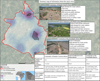 |
Fig. 1 Location map of the communities studied, with selection criteria and summary information. Carte de localisation des communautés étudiées, avec critères de sélection et informations synthétiques. |
 |
Fig. 2 Photos of methodological processes in the study areas, showing social mapping workshops (A); interviews (B); and the application of the questionnaire (C). Photos illustrant les processus méthodologiques dans les zones d'étude : les ateliers de cartographie sociale (A), les entretiens (B), et l'application du questionnaire (C). |
2.2 Research methodology
This study combined quantitative and qualitative methods to investigate water access, multiple uses, and local strategies to cope with household water insecurity. This methodological choice reflects the multidimensional and relational nature of water insecurity. The quantitative HWISE (Household Water Insecurity Experiences) questionnaire, based on Young et al. (2019) and Jepson et al. (2023), was applied to assess multiple dimensions of water insecurity. The complete instrument comprises 160 questions, including items from the HWISE scale and additional modules that address socioeconomic aspects, water sources and storage, use of cisterns and water trucks, water for agriculture, periods of scarcity and availability of piped water, and other locally relevant issues to understand water insecurity (Jepson et al., 2017). Our mixed methods approach was tailored to understand how households deal with water insecurity, while navigating between overlapping water supply systems and diverse water uses (Fig. 2). Therefore, we used the results of the questionnaire regarding water sources, access and availability, hours of scarcity and availability, cisterns, and water trucks, without mobilizing the full HWISE Scale. Data were collected from January to May 2024, covering both dry and rainy periods. The survey was conducted across the three study communities, with sampling proportional to the number of households totaling 300 questionnaires, with a confidence level of 90% and a sampling error of 5%.
To highlight the narratives of local actors, qualitative and participatory approaches were adopted, including open interviews with spoken maps and participatory social mapping workshops. The selection of participants sought to ensure territorial representativeness and diversity of profiles. Interviewees included farmers, health workers, association leaders, teachers, merchants, union members, and landowners.
A total of 28 open interviews were conducted, in which spoken maps supported narratives about territorial experiences and social memory. The topics addressed included the history of the communities, water sources used, storage strategies, perceptions of water quality and reliability, coordination between different sources, impacts of available water on production, use in productive backyards, and quality of life. The interviews were conducted randomly among the groups mentioned, recorded, transcribed, and later coded in ATLAS.ti version 25.0.1 to guide the analysis and subsequent data cross-referencing.
Participatory social mapping workshops were organized in each community, addressing four dimensions: water supply, local production, infrastructure and services, and sociopolitical dynamics. This allowed for the spatialization of water sources and management flows, as well as the identification of local patterns and conflicts (Silva et al., 2018). The recruitment of participants was carried out with the support of community leaders, through in-person invitations made a few days before the workshops and dissemination via messaging applications. After the activities, the maps were digitized and processed using QGIS 3.28 (QGIS Development Team, 2023).
3 Results: access and water insecurity in rural areas of Ceará
This section shows the results obtained on the basis of three case studies. Each case illustrates particular issues in the access to water: (i) the private appropriation of a community system in Nenelândia; (ii) structural limitations and poor water quality in Damião Carneiro; and (iii) partial integration into urban networks in Belém. Together, these cases reveal how water insecurity is produced by local dynamics of power, infrastructure, and adaptation, going beyond the simple presence or absence of water.
3.1 Private appropriation a community water supply system in Nenelândia
The rural community studied in Nenelândia district arose from the spontaneous occupation by families in search of agricultural land, probably at the beginning of the 20th century. The first mention of water infrastructure dates to the 1930s, when small reservoirs were built in the area. Water access was precarious and unequal, relying on manual transport or the use of animals, with sources in ephemeral streams and small private reservoirs.
In 1999, through the São José I Project, a community water supply network for domestic use was installed. Initially, boreholes fed the network, but with insufficient flows, so through agreements between the municipality and the community, one of the landlords authorized one of his dam reservoirs to be used as the main source. The installed network included a pump, an elevated tank with a capacity of 80 m3, water pipes, and one tap per residence.
Initially, water management was community-based: the community association charged a monthly fee of R$ 5.00 per family to cover maintenance costs and passed on a portion of the fees to the dam owner to cover the electricity cost for pumping water from the dam to the network. A few years later, conflicts arose between the reservoir owner and the community association, as the association did not accept what it considered abusive charges for energy. The association questioned the accuracy of energy consumption, raising suspicions about a possible attempt to commercialize water, which is not permitted officially.
In 2005, the conflict resulted in the interruption of supply and the unilateral appropriation and control of what was officially a public system by the reservoir owner. From that moment on, he instituted monthly charges for the consumption of 10 m3 per residence, contrary to the original community character of the water supply system.
During the last severe drought (2012–2018), at its peak in 2015–2017, faced with a critical reduction in the reservoir's volume, the owner cut off the water supply to the community, prioritizing its use for his cattle. With no alternatives, the community mobilized political support to build an emergency water pipeline from the Banabuiú River, 16 km away. As the drought intensified, the river also dried up, and the population was restricted to rainwater stored in cisterns and water supplied by tankers. In addition to limited water supplies for consumption and hygiene, the shortage compromised families' food production and animal watering, worsening rural vulnerability. In 2018, with the partial resumption of the Banabuiú River's flow, the emergency pipeline was restored, but it only partially served the community because the topography made it difficult to pump water to the higher areas.
Faced with the precariousness of the public service, residents turned once again to the reservoir owner. In 2020, he reconnected the supply network to his reservoir but only supplied about 55 of the 80 houses in the community. He excluded families linked to the former community association, with which he had conflicts, using water as a tool for control and personal retaliation. The unserved families built small networks connected to small private reservoirs.
This case highlights what Bakker (2007) calls socially produced scarcity: water insecurity does not stem from a lack of infrastructure, but from private and unequal control over access, resulting from the private appropriation of a publicly funded water supply system.
The results revealed that currently, families live with daily variations of 4 to 24 h without tap water and with unsatisfactory quality, even though the last few years have been within the average rainfall range. As a coping strategy, residents diversify their water sources, using the supply network when available, while storing rainwater and water from trucks in cisterns and other containers to ensure, as much as they can, domestic and productive uses: “I think the more you store, the better” (inhabitant). These coping strategies are quite common across the semi-arid region (Azupogo et al., 2023).
Figure 3 was prepared based on the exercise of social mapping, adding data from the questionnaire on hours of intermittent supply, and qualitative field observations. The map shows a fragmentation of water supply networks in the community studied. Two social groups with different forms of access to water can be observed: i) the community supply network, currently appropriated by the landlord (in blue), supplies water to two-thirds of households; ii) the remaining families (in purple, pink, and red) have built informal pipes connected to private reservoirs.
Only households connected to the community water supply network under private control reported daily periods of intermittent piped water supply. The red gradient represents the density of households affected by interruptions, with darker areas indicating those with the highest number of hours without supply. The intensity of this gradient increases towards the end of the network, highlighting an unequal distribution of water. Interviews pointed to two main causes for this: i) inadequate network sizing, which results in lower flow to homes located at the end of the network; ii) control of pumping time by the reservoir owner, who limits the operation of the pump, preventing water from reaching all residences evenly. Notably, interviewees did not mention the multiple and productive uses of piped water by certain households as factors contributing to the interruption, although these uses typically involve higher water consumption that consequently exceeds the hydraulic capacity of the network, which can lead to pressure drops or uneven flow distribution, especially in residences located at the end of the network.
Figure 3 highlights socioeconomic divisions in addition to the fragmentation of the supply network. The first group (blue network) consists of small farmers, many of whom work on the reservoir owner's land, either through leasing or service provision. These residents maintain domestic productive activities in their backyards, such as small animal husbandry and family horticulture.
The second group brings together families with greater purchasing power, who own land, livestock, and their own reservoirs, as well as private infrastructure such as boreholes, private water networks, and milk cooling tanks for dairy production. This group also engages with small home industries, made possible by more stable access to water.
Finally, the map highlights the multiple uses of local reservoirs, which combine domestic supply, agriculture, fishing, and recreation, reinforcing the complexity of the interactions between water infrastructure, social inequalities, and multiple uses of water.
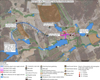 |
Fig. 3 Social map of the community with water sources, uses, water supply network, agriculture, showing the density of households affected by the water supply interruption. Carte sociale de la communauté avec les sources d'eau, les utilisations, le réseau d'approvisionnement en eau, l'agriculture, indiquant la densité des ménages touchés par l'interruption de l'approvisionnement en eau. |
3.2 Undersized water supply systems and poor quality of sources in a village in Damião Carneiro district
The village that is now the seat of the Damião Carneiro district emerged from the gradual land occupation by rural workers linked to cotton and livestock activities in the early 20th century. It is informally divided into sectors A and B, a historically and socially constructed distinction later reinforced by separate water supply networks and local community organizations.
In the late 1990s, the São José I Project installed two independent domestic water supply networks in the village, corresponding to sectors A and B. Each system had a water source, a pump, an elevated water tank, and a specific distribution network. Because it was classified as an urban area by the IBGE (Brazilian Institute of Geography and Statistics), the village was not included in the cistern program (P1MC). This limited their access to rainwater storage. Only families with sufficient purchasing power were able to build private cisterns. As an alternative, the municipality built a collective cistern to store water from water tankers, used for human consumption throughout the year.
Water insecurity intensified with the long drought from 2012 to 2018, when the region's reservoirs dried up. In response to the crisis, the state invested in the drilling of boreholes. Both sectors A and B saw their water sources collapse and were provided with boreholes. However, the local aquifers have high levels of salinity, compromising potability. In sector B, in addition to the drilled wells, a desalination plant was installed through political mediation, allowing the treatment of groundwater for human consumption.
Both sectors are currently supplied with saline water from boreholes, each with their own distribution network and autonomous community management, coordinated by the local association of each sector. However, poor water quality and low aquifer recharge during droughts have turned this village in expressing the highest demand for water tankers in Quixeramobim municipality. Water from tankers, intended for climate emergencies, now routinely supplements the supply network. One resident explains: “There is water from the tap, but it comes from a borehole, so it is salty and can only be used for bathing and washing clothes.” Another resident adds: “I get water for my plants from the community cistern because the tap water is too salty and kills the plants.”
Population growth has exacerbated the limitations of the supply network. The old central water reservoir is no longer used because it can no longer meet demand. Currently, water is distributed through a combined system of three boreholes that pump water directly into homes, creating distinct sub-sectors linked to specific boreholes. This system has created internal inequalities: while some subsectors are supplied continuously, others face intermittent distribution, with more than 12 h per day without tap water. 71% of households explained that they have scheduled interruptions in their water supply, which compromises regular access and forces residents to resort to complementary sources and increase water storage.
Families have developed multiple storage strategies to mitigate the effects of intermittent and poor-quality water. Families with higher incomes and physical space built private cisterns and purchased 1,000-liter drums and 5,000-liter polyethylene tanks, to store a greater water volume and ensure greater autonomy. The collective cistern, supplied by water trucks, remains the main source of drinking and cooking water for families who are unable to store water, but it is insufficient for other domestic uses and small-scale productive activities.
Families have also developed multifunctional arrangements for water sources that are separated by origin and use. From the most to the least used, there is: rainwater for drinking and cooking; water from tankers for cooking, oral hygiene, and occasionally for irrigating small backyards; water from the supply network for cleaning the house, washing clothes, bathing, and backyard uses.
This diversification strategy is confirmed by data from our survey, which shows that 95% of households have access to the community water supply network, 89% use rainwater, 31% receive water from trucks, 19% consume desalinated water, 16% have used water from trucks at some point, and 2% have piped water from a private source. About a quarter of households use up to three different sources simultaneously (rainwater, cisterns, and the supply network). “Rainwater” and “cisterns” are considered separate sources, as many households store rainwater in makeshift containers such as drums, buckets, and PET bottles, in addition to cisterns.
During the rainy season, households seek to maximize rainwater storage to reduce their dependence on piped water, whose quality and regularity remain uncertain.
Figure 4 shows five types of domestic water supply arrangements identified in the communities surveyed, showing how households access, store, and use water. These arrangements are based on a combination of sources and uses, which are different in the rainy and dry seasons. The diversity of sources and the separation of uses for human consumption, hygiene, and productive activities highlight adaptive strategies in the face of irregular supply, diverse water quality, and limitations in available infrastructure.
In addition to the diversification of water sources and increased storage, water sharing between families emerged as a significant adaptation strategy. Sharing was not limited to rainwater stored in cisterns, but also included piped and even bottled water, highlighting strong solidarity networks in response to local water insecurity. 49% of families reported donating or receiving water from others, which is similar to practices in the community of Nenelândia district (45%), while water is shared to a lesser extent in the settlement in Belém district (28%).
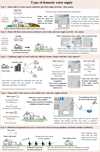 |
Fig. 4 Example diagrams of domestic water supply systems. Exemples de schémas de systèmes d'approvisionnement en eau domestique. |
3.3 Connecting to the urban water network while maintaining multiple sources in the Belém district settlement
This settlement was created in 1997 as part of the agrarian reform federal program. In the early 2000s, a domestic water network was installed linking it to existing reservoirs, followed by domestic cisterns, expanding access to water. Due to a favorable political context, federal settlements were prioritized for infrastructure, agricultural support, and technical assistance. However, budget cuts and a reduction in the capacity of INCRA (National Institute of Colonization and Agrarian Reform) in recent years have distanced settlements from public policies, limiting access to projects, assistance, and credit. This directly affects the maintenance and expansion of water supply infrastructure and requires greater autonomy for families in managing multiple water sources and uses.
The settlement has six autonomous housing sectors, each with distinct access arrangements, supply sources, and management dynamics, leading to internal inequalities. Water insecurity in the settlement results from outdated infrastructure and the absence of regular technical oversight. Originally, each sector was supplied by networks linked to specific reservoirs, but these sources have declined due to prolonged droughts, and in some cases, water quality is inadequate. Undersized systems and limited capacity have led to frequent interruptions, prompting families to rely on rainwater and water tankers for domestic and productive uses.
The severe drought from 2012 to 2018 exposed infrastructure imbalances within the settlement. In two of the six sectors, the collapse of local reservoirs led to a total failure in supply, leaving families entirely dependent on cisterns with rainwater and water tankers. Through local political intervention, residents of these two sectors successfully pressured the municipality and, in 2020 and 2021, secured the extension of urban piped water supply to their sectors. They now receive treated water on a regular basis. In contrast, other sectors faced internal disorganization and management disputes, which prevented similar advances.
Paradoxically, with stable, continuous, and good-quality access through the urban network, and with most families having cisterns to store rainwater, residents of these two sectors continue to rely on multiple sources. About 23% of households still receive water through water tankers, and 56% have used them in the recent past, mainly out of fear or out of precaution in the face of possible droughts. This use reveals a new role for the water tanker supply, which has become complementary and preventive. When there is sufficient water supply, some families direct the resource to small-scale productive uses, such as irrigating backyards and watering livestock.
In another sector of the settlement, where the supply network is informal and community-managed, many residents use water from the supply network not only for domestic needs, but also to irrigate productive backyards and raise livestock. The intensification of water use has overloaded the system, leading to frequent pump failures and irregular water distribution, causing prolonged shortages in some subsectors. Dissatisfaction has grown with the fixed billing model, which charges all households equally, regardless of use. Residents have requested water meters and individual billing to promote fairer and more sustainable management. In addition to structural limitations, conflicts over piped water use also affect levels of water insecurity.
Figure 5 shows how households combine sources based on uses. Piped water is the most versatile and widely used source, predominant in domestic tasks but also widely used in small animal husbandry and productive backyards.
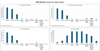 |
Fig. 5 Distribution of water sources according to their main uses in the three studied communities. Répartition des sources d'eau selon les principales utilisations dans les trois communautés étudiées. |
4 Discussion
4.1 Progressive evolution of public policies, multiple sources, and social arrangements
The various public policies on water infrastructure in northeastern Brazil, such as the construction of reservoirs, cisterns, simplified supply systems, boreholes, and water tankers, reflect efforts to expand access to water, with a predominant focus on domestic use. Fragmentation resulted from a multiplicity of programs by federal, state, municipal, and civil society actors with different objectives. The progressive implementation of these public programs generated conflicts and divergences that were not only material but also conceptual, reorganized through institutional (re)arrangements or “bricolage” (Nogueira et al., 2020). This led to overlapping infrastructure, gaps in coverage, and redundancy of functions. Although better coordination could have reduced overlaps and inefficiencies, it would likely not have prevented the multiple uses of multiple water sources, which reflect adaptive responses of households and communities. Some initiatives were motivated by emergencies (e.g., water tankers), while others aimed at structural solutions (e.g., cisterns). The lack of integrated planning and political continuity prevented the development of a coherent territorial policy, resulting in disconnected systems that were at times poorly integrated into community dynamics (Aguiar et al., 2019).
However, once incorporated into daily routines, these infrastructures are often used in a complementary manner and for broader purposes, including productive uses, revealing the ability of families to adapt and reinterpret them, transforming sectoral arrangements into complex water management strategies (Machado et al., 2017; Silva et al., 2019). This is evident in Nenelândia, where private appropriation of the public supply system has led to intermittent supply and prompted families to diversify their sources, made possible by the multiplicity of infrastructures. This highlights local responses to inequalities in water access.
Water use patterns challenge the assumption that “domestic water” is synonymous with drinking water. As Goff and Crow (2014) observe, the centrality of access to “drinking water” in public policy obscures the complexity of everyday water uses in the domestic environment. In rural contexts, such as those in our study, domestic water is also used in productive backyards, for growing food, raising backyard animals, and even watering livestock, which increases demand on water supply systems and may lead to disagreements among users, as documented in Belém. In addition, water supply projects assume that the water distributed is suitable for consumption, but the case of the village of Damião Carneiro shows that poor water quality forces families to resort to other sources, such as buying bottled water for drinking and cooking as an adaptation strategy (see also Lee et al., 2020).
It is precisely this understanding that underpinned the cistern program, which proposed the use of rainwater as drinking water when properly collected and stored, and offered a reserve of 16,000 liters per family, which serves as an important reinforcement to domestic supply (Santos et al., 2013). As observed in Damião Carneiro, cisterns are part of broader domestic water use arrangements, allowing for diversified management strategies and the combination of multiple sources and uses. These arrangements enable families to circumvent the limitations of intermittent supply, poor water quality, and seasonal variability.
Faced with water supply constraints, most households, in all locations studied, developed daily strategies for collective water negotiation and management based on networks of trust and solidarity. These negotiations take different forms and occur with varying intensity, depending on the context of water availability, the degree of scarcity, and the social ties between residents (Wutich et al., 2022). Sharing rainwater or cisterns among neighbors or relatives and using boreholes collectively are common practices for human consumption, but also for other domestic uses. However, these practices remain by and large invisible in public policies (Jankovic-Rankovic et al., 2024). They function as a structuring form of access to water, based on social ties and networks of trust that operate outside official systems.
However, these exchanges are not without tension. Water sharing can involve feelings of shame, frustration, and conflict, especially in contexts of scarcity or prolonged dependence (Wutich et al., 2022). In the communities studied, the preference for sharing with close family members or in small quantities seems to reflect this concern in order to maintain balanced relationships and avoid friction. Although sharing is an important response to domestic water insecurity, it carries social and emotional costs.
In addition to these daily practices, there are political negotiations to expand access to infrastructure. For example, in the settlement in Belém, some collectives mobilized political support to negotiate with the municipality the extension of the water supply network from the neighboring city to their communities. These (in)formal agreements follow a logic of perceived justice, reciprocity, and collective action, revealing coping strategies that combine political coordination and community agreements, while shaping local forms of water governance, sustained by bonds of trust, social ties, and political connections. However, this case also exposes the limits of solidarity, as claims for water meters and individual billing generated tensions that weakened collective arrangements.
4.2 The access paradox: multiple sources and no certainty
The quest for multiple sources for multiple uses is also related to the limitations of existing infrastructure, especially undersized supply networks, flow limitations, and water quality problems (Smits et al., 2010). In Damião Carneiro district, families multiply water sources and increase storage capacity to cope with irregularity of the network (Fig. 6). This reality is not isolated: even in communities formally served by water supply systems, restrictions related to pressure, storage capacity, and water quality encourage families to maintain alternative sources (Aleixo et al., 2019; Tomaz et al., 2020). From the residents' point of view, water quality is also an important factor encouraging the use of multiple sources. In all the locations investigated, residents reported that piped water was brackish, tasted bad, was yellowish in color, or sometimes contained larvae. Under these conditions, diversifying water sources is not just a choice, but a necessary strategy for dealing with systems that do not consistently meet multiple domestic demands.
Despite increased access to water, the perception of water insecurity remains deeply rooted in the local imagination. Recurring droughts fuel constant fear of water scarcity and produce lasting emotional effects, such as insecurity about the future, sadness, and discouragement, even when supplies improve (De Sousa Camurça et al., 2016).
The collective memory of drought justifies preventive strategies, such as increasing storage, even during periods of relative water stability. In some communities, especially in the settlement in Belém, water from water tankers was accepted even when other sources were available, simply to keep the Army's records active and ensure future supply: “We keep water from the trucks at this time of year just so we don't lose the water and lose our registration... We don't know what the future holds, if it will be a good winter...”.
Household perceptions reveal dimensions of water insecurity that technical indicators often fail to capture. Metrics based on the creation of new water sources and infrastructure, volume, or formal coverage ignore emotional effects, efforts, and adaptation mechanisms, producing an incomplete picture of reality (Jepson et al., 2017). Water insecurity is experienced not only as a lack of water, but also as the inadequacy of available water, whether because it cannot be consumed, is not available when needed, or cannot be used for the wide range of domestic and productive activities.
Water insecurity experienced by rural families is not just a matter of scarcity or technical failures in infrastructure; it also manifests itself in the loss of autonomy over means of access to water. The presence of supply systems does not always guarantee the effective right to water, especially when these systems become the target of private appropriation, as in the community of Nenelândia district. Such appropriation subjects residents to a regime of constant dependence and insecurity. More than a material limitation, it is a daily experience of vulnerability, in which access to water is precarious, uncertain, and unequal. Private appropriation of public resources deepens inequalities and generates silent forms of exclusion that do not appear in formal indicators but are felt by families as a constant threat to their presence and dignity. The problem here is not the absence of water, but the fragility of collective guarantees when access to an essential resource becomes informally controlled by private actors.
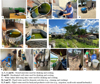 |
Fig. 6 Photos showing storage strategies according to water sources and uses by households. Photos illustrant les stratégies de stockage en fonction des sources d'eau et des usages domestiques. |
5 Conclusions
This study highlights how institutional fragmentation in public water policies, together with local and infrastructural constraints, shapes the conditions of access to water in rural communities. We showed how families develop strategies to deal with limitations by developing multiple sources, favoring storage, adapting uses, and activating solidarity networks. The presence of multiple water sources plays a central role in the habitability of these communities. Far from being merely an emergency strategy, this diversification is what enables families to meet their daily needs. In this context, domestic and productive uses are often interlinked: water for domestic needs is also used to irrigate vegetable gardens, raise backyard animals, and support food production. These domestic practices are not marginal; they are fundamental to sustaining rural livelihoods, ensuring quality of life, food security, and, indeed, their very presence. Local arrangements, such as the complementary use of sources, sharing among neighbors, and community agreements, reveal modes of governance based on solidarity, experience, and resilience. However, these initiatives do not replace the role of the State. Water insecurity remains present as a feeling, expressed in accounts of fear, frustration, and uncertainty, and as a political phenomenon linked to the unequal way in which access to water is distributed and controlled. Insecurity, therefore, must be understood not only as the absence of water, but as an expression of the political and social forms through which access to it is mediated. Dealing with rural water insecurity, therefore, needs to be based on the understanding of the multiplicity of practices, sources and uses, and local constraints.
Funding
The authors acknowledge the financial support of LMI IDEAL, CNPq (423927/2021-3; 421688/2021-1), Capes COFECUB (88887.711963/2022-00), FUNCAP-FIT (4920881/2018), Funceme, and CIRAD.
Ethics approval
As this study involved interactions with people, the research protocol was approved by the Ethics Committee of the Federal University of Ceará (approval no. 79724724.0.0000.5054).
References
- ATLAS.ti. 2023. ATLAS.ti Mac (version 25.0.1) Scientific Software Development GmbH [Qualitative data analysis software]. https://atlasti.com. [Google Scholar]
- Aguiar LC, Del Grossi ME, Oliveira LG, Ávila ML. 2019. As políticas públicas no semiárido brasileiro: uma revisão de literatura. Rev Econ Nordeste 50(2): 9–22. https://doi.org/10.61673/ren.2019.968. [Google Scholar]
- Aleixo B, Pena JL, Heller L, Rezende S. 2019. Infrastructure is a necessary but insufficient condition to eliminate inequalities in access to water: research of a rural community intervention in Northeast Brazil. Sci Total Environ 652: 1445–1455. https://doi.org/10.1016/j.scitotenv.2018.10.202. [Google Scholar]
- Azupogo UW, Achore M, Dery FA, Bisung E. 2023. Health implications of coping with water insecurity at the household level. Water Secur 19: 100135. https://doi.org/10.1016/j.wasec.2023.100135. [Google Scholar]
- Bakker K. 2007. The “commons” versus the “commodity”: alter-globalization, anti-privatization and the human right to water in the global south. Antipode 39(3): 430–455. https://doi.org/10.1111/j.1467-8330.2007.00534.x. [Google Scholar]
- De Sousa Camurça CE, Alencar AB, Cidade EC, Ximenes VM. 2016. Consecuencias de la sequía en la vida de los residentes del noreste rural de Brasil. Avances Psicol Latinoam 34(1): 117–128. https://doi.org/10.12804/apl34.1.2016.08. [Google Scholar]
- Elliott M, Foster T, MacDonald MC, Harris AR, Schwab KJ, Hadwen WL. 2019. Addressing how multiple household water sources and uses build water resilience and support sustainable development. Clean Water 2(1): 6. https://doi.org/10.1038/s41545-019-0031-4. [Google Scholar]
- Foster T, Hope R. 2017. Evaluating waterpoint sustainability and access implications of revenue collection approaches in rural Kenya. Water Resour Res 53(2): 1473–1490. https://doi.org/10.1002/2016WR019634. [Google Scholar]
- Gasmi H, Vieira LF, Kuper M, Martins ESPR, Burte J. 2024. The role of small-scale hydraulic infrastructure in transforming hydrosocial territories in a catchment in Ceará, Brazil. Water Alternat 17(1): 46–72. [Google Scholar]
- Goff M, Crow B. 2014. What is water equity? The unfortunate consequences of a global focus on 'drinking water'. Water Int 39(2): 159–171. https://doi.org/10.1080/02508060.2014.886355. [Google Scholar]
- Hall RP, Van Koppen B, Van Houweling E. 2014. The human right to water: the importance of domestic and productive water rights. Sci Eng Ethics 20(4): 849–868. https://doi.org/10.1007/s11948-013-9499-3. [Google Scholar]
- INSA – Instituto Nacional do Semiárido. 2024. Semiárido Brasileiro. Governo Federal. https://www.gov.br/insa/pt-br/semiarido-brasileiro. [Google Scholar]
- Jankovic-Rankovic J, Roque A, Rosinger A, Adams E, Pearson AL, Lloréns H, et al. 2024. Household water sharing: implications for disaster recovery and water policy. Water Secur 23: 100178. https://doi.org/10.1016/j.wasec.2024.100178. [Google Scholar]
- Jepson WE, Wutich A, Collins SM, Boateng GO, Young SL. 2017. Progress in household water insecurity metrics: a cross-disciplinary approach. WIREs Water 4: e1214. https://doi.org/10.1002/wat2.1214. [Google Scholar]
- Jepson W, Tomaz P, Consortium HWISE. 2023. Development and validation of a household water insecurity scale for Northeast Brazil. J Latin Am Geogr 22(1): 83–115. https://doi.org/10.1353/lag.2023.a899555. [Google Scholar]
- Lee GO, Whitney HJ, Blum AG, Lybik N, Cevallos W, Trueba G, et al. 2020. Household coping strategies associated with unreliable water supplies and diarrhea in Ecuador, an upper-middle-income country. Water Res 170: 115269. https://doi.org/10.1016/j.watres.2019.115269 [Google Scholar]
- Machado TTV, Dias JT, Silva TC da. 2017. Evolução e avaliação das políticas públicas para a atenuação dos efeitos da seca no semiárido brasileiro. Gaia Sci 11(2). https://doi.org/10.22478/ufpb.1981-1268.2017v11n2.31831. [Google Scholar]
- Maleksaeidi H, Karami E, Zamani GH, Rezaei-Moghaddam K, Hayati D, Masoudi M. 2016. Discovering and characterizing farm households' resilience under water scarcity. Environ Dev Sustain 18(2): 499–525. https://doi.org/10.1007/s10668-015-9661-y. [Google Scholar]
- Mitroi V, Henriquez DME, Rabelo LS, Tritsch I, Vasconcelos Júnior FC, Kuper M, et al. 2025. Grounded perspectives on water infrastructures and drought imaginaries in the semi-arid Northeast of Brazil. J Hydrol 662: 133894. https://doi.org/10.1016/j.jhydrol.2025.133894. [Google Scholar]
- Nogueira D, Milhorance C, Mendes P. 2020. Do Programa Um Milhão de Cisternas ao Água para Todos: divergências políticas e bricolagem institucional na promoção do acesso à água no Semiárido brasileiro. IdeAs 15. https://doi.org/10.4000/ideas.7219. [Google Scholar]
- QGIS Development Team. 2023. QGIS Geographic Information System (Version 3.28) [Computer software]. Open Source Geospatial Foundation. [Google Scholar]
- Santos AC, Ceballos BSO, Sousa CM. 2013. Políticas públicas de água e participação no semiárido: limites e tensões no P1MC. Revista Eletrôn Gestão Tecnol Ambientais 1(1): 145–161. https://doi.org/10.9771/gesta.v1i1.8279. [Google Scholar]
- Silva R, Jaber M, Sato M. 2018. Social mapping and environmental education: dialogues from participatory mapping in the Pantanal, Mato Grosso, Brazil. Environ Educ Res 24(10): 1514–1526. https://doi.org/10.1080/13504622.2018.1545151. [Google Scholar]
- Silva JB, Guerra Sobrinho LD, Gomes RA. 2019. A ralé hídrica e a elite da água no semiárido brasileiro: a articulação entre o mercado dos carros-pipa, as cisternas residenciais, as hidrobiopolíticas e seus agenciamentos. Contemporânea - Revista Sociol UFSCar 9(3): 943–962. https://doi.org/10.4322/2316-1329.120. [Google Scholar]
- Simão EJP, Funayama S, Ribeiro EM. 2024. Carros-pipa: uma política de acesso à água para famílias rurais no semiárido mineiro. Anais do Congresso da Sociedade Brasileira de Economia, Administração e Sociologia Rural (SOBER) 62. https://doi.org/10.29327/62-congresso-da-sober-397784.817810. [Google Scholar]
- Smits S, Van Koppen B, Moriarty P, Butterworth J. 2010. Multiple-use services as alternative to rural water supply services: a characterisation of the approach. Water Alternat 3(1): 102–121. [Google Scholar]
- Thompson J, Porras IT, Tumwine JK, Mujwahuzi MR, Katui-Katua M, Johnstone N, et al. 2001. Drawers of Water II: 30 years of change in domestic water use and environmental health in East Africa. London (UK): International Institute for Environment and Development, 110 p. https://www.iied.org/sites/default/files/pdfs/migrate/9049IIED.pdf. [Google Scholar]
- Tomaz P, Jepson W, Santos JO. 2020. Urban household water insecurity from the margins: perspectives from Northeast Brazil. Prof Geogr 72(4): 481–498. https://doi.org/10.1080/00330124.2020.1750439. [Google Scholar]
- Tucker J, MacDonald A, Coulter L, Calow RC. 2014. Household water use, poverty and seasonality: Wealth effects, labour constraints, and minimal consumption in Ethiopia. Water Resour Rural Dev 3: 27–47. https://doi.org/10.1016/j.wrr.2014.04.001. [Google Scholar]
- White GF, Bradley DJ, White AU. 2002. Drawers of water: domestic water use in East Africa. 1972. Bull World Health Organ 80(1): 63–73. [Google Scholar]
- Wutich A, Rosinger A, Brewis A, Beresford M, Young S. 2022. Water sharing is a distressing form of reciprocity: shame, upset, anger, and conflict over water in twenty cross-cultural sites. Am Anthropol 124(2): 279–290. https://doi.org/10.1111/aman.13682. [Google Scholar]
- Young SL, Boateng GO, Jamaluddine Z, Miller JD, Frongillo EA, Neilands TB, et al. 2019. The Household Water InSecurity Experiences (HWISE) Scale: development and validation of a household water insecurity measure for low-income and middle-income countries. BMJ Global Health 4(5). https://doi.org/10.1136/bmjgh-2019-001750. [Google Scholar]
Cite this article as: de Freitas Vieira L, de Oliveira Santos J, Kuper M, Burte J, Passos Rodrigues Martins E.S. 2026. Overlapping projects and multiple sources to mitigate household water insecurity in rural areas in the semi-arid region of Brazil. Cah. Agric. 35: 6. https://doi.org/10.1051/cagri/2026002
All Figures
|
Fig. 1 Location map of the communities studied, with selection criteria and summary information. Carte de localisation des communautés étudiées, avec critères de sélection et informations synthétiques. |
| In the text | |
|
Fig. 2 Photos of methodological processes in the study areas, showing social mapping workshops (A); interviews (B); and the application of the questionnaire (C). Photos illustrant les processus méthodologiques dans les zones d'étude : les ateliers de cartographie sociale (A), les entretiens (B), et l'application du questionnaire (C). |
| In the text | |
|
Fig. 3 Social map of the community with water sources, uses, water supply network, agriculture, showing the density of households affected by the water supply interruption. Carte sociale de la communauté avec les sources d'eau, les utilisations, le réseau d'approvisionnement en eau, l'agriculture, indiquant la densité des ménages touchés par l'interruption de l'approvisionnement en eau. |
| In the text | |
|
Fig. 4 Example diagrams of domestic water supply systems. Exemples de schémas de systèmes d'approvisionnement en eau domestique. |
| In the text | |
|
Fig. 5 Distribution of water sources according to their main uses in the three studied communities. Répartition des sources d'eau selon les principales utilisations dans les trois communautés étudiées. |
| In the text | |
|
Fig. 6 Photos showing storage strategies according to water sources and uses by households. Photos illustrant les stratégies de stockage en fonction des sources d'eau et des usages domestiques. |
| In the text | |
Current usage metrics show cumulative count of Article Views (full-text article views including HTML views, PDF and ePub downloads, according to the available data) and Abstracts Views on Vision4Press platform.
Data correspond to usage on the plateform after 2015. The current usage metrics is available 48-96 hours after online publication and is updated daily on week days.
Initial download of the metrics may take a while.