


| Issue |
Cah. Agric.
Volume 35, 2026
|
|
|---|---|---|
| Article Number | 4 | |
| Number of page(s) | 12 | |
| DOI | https://doi.org/10.1051/cagri/2025040 | |
| Published online | 27 February 2026 | |
Article de synthèse / Review Article
Research on pastoralism in France: state of knowledge and current issues☆
Recherches sur le pastoralisme en France : état des lieux des connaissances et questions vives
1
UMR SELMET, Université de Montpellier, INRAE, CIRAD, Institut Agro, Montpellier, France
2
UR Ecodéveloppement, INRAE, Avignon, France
3
UMR Genphyse, Université de Toulouse, INRAE, ENVT, Castanet-Tolosan, France
4
UMR AGIR, Université de Toulouse, ENSFEA, INPT, EI PURPAN, Castanet-Tolosan, France
5
UMR Territoires, Université Clermont Auvergne, INRAE, VetAgro‐Sup, AgroParisTech, Clermont-Ferrand, France
* Corresponding author: This email address is being protected from spambots. You need JavaScript enabled to view it.
Received:
16
April
2025
Accepted:
4
December
2025
Abstract
This article provides an overview of the current state of knowledge on pastoral systems and territories in France, focusing on the key issues that affect them. It provides a comprehensive analysis of the factors contributing to the decline of pastoralism in a context of intensified production and herd expansion, adaptation to climate change and market fluctuations, and the return of wild predators. Five priority areas for research are identified: animal selection and breeding in pastoral environments; pastoralism as a specific agroecological model, with its strengths and weaknesses; multi‐stakeholder pastoral territories, as spaces for confrontation and development of collective projects; pastoralism occupations and their attractiveness; and data derived from methods for monitoring changes in vegetation, biodiversity, and livestock systems. While not identical, many of these issues are notably similar to those in pastoral contexts in other parts of the world, particularly West Africa.
Résumé
Cette synthèse dresse un état des lieux des connaissances sur les systèmes et territoires pastoraux en France au prisme des principaux enjeux qui les traversent. Le repli pastoral en situation d'intensification de la production et d'agrandissement des troupeaux, l'adaptation au changement climatique et aux fluctuations des marchés, ou encore le retour de prédateurs sauvages sont particulièrement discutés. Cinq champs de recherche prioritaires ont été dégagés : l'animal en milieu pastoral ; le pastoralisme comme modèle d'agroécologie avec ses forces et ses faiblesses ; les territoires pastoraux multi‐acteurs, espaces de confrontation et de projets collectifs ; les métiers du pastoralisme et leur attractivité, les données issues des méthodes de suivi de l’évolution des végétations, de la biodiversité et des systèmes d’élevage. Bien des sujets font écho avec les situations pastorales du reste du monde, notamment en Afrique de l'Ouest, sans pour autant les recouvrir exactement.
Key words: pastoralism / pastoralists / rangelands / livestock / France
Mots clés : pastoralisme / systèmes d'élevage / parcours / éleveurs / France
This paper is a translation of a paper previously published in French in the same journal: Dedieu B, Hubert B, Aubron C, Hazard D, Lauvie A, Magne M‐A, Meuret M, Rapey H, Stark F, Nozières‐Petit M‐O. 2025. Recherches sur le pastoralisme en France : état des lieux des connaissances et questions vives. Cah. Agric. Vol: 250058. https://doi.org/10.1051/cagri/2025036
© B. Dedieu et al., Hosted by EDP Sciences 2026
 This is an Open Access article distributed under the terms of the Creative Commons Attribution License CC-BY-NC (https://creativecommons.org/licenses/by-nc/4.0), which permits unrestricted use, distribution, and reproduction in any medium, except for commercial purposes, provided the original work is properly cited.
1 Introduction
According to ILRI et al. (2021), rangelands support the livelihoods and food security of hundreds of millions of pastoralists around the world, who provide livestock products not only for themselves but also for millions of others (https://www.ilri.org/knowledge/publications/rangelands‐atlas). Pastoralists use their livestock to convert often sparse and short‐lived vegetation that cannot be consumed by humans into inexpensive, healthy food with high‐quality protein for both domestic and export markets. They thus contribute to global nutrition and food security with a near‐zero carbon footprint. They also produce hides, skins for multiple uses, wool, cashmere, etc., which contribute to artisanal, industrial, and food‐producing activities around the world. According to the United Nations (2022), “rangelands cover over half of the world's earth surface and is thus our largest ecosystem, but they are also the most endangered and least protected.”
In France, pastoralism is an important part of the herbivore farming sector. Approximately 10% of livestock farms use grazing lands, which represent 1.6 to 1.8 million hectares of the 29 million hectares of national usable agricultural area (De Roincé and Seegers, 2020). Pastoralism is used to breed all livestock species in this manner (sheep and goats, cattle, horses, and even pigs), including many local breeds. A considerable number of productions are under geographical indications that promote and leverage the territorial roots of animal products. Pastoral areas are also significant reservoirs of biodiversity and provide a wide range of ecosystem services. However, France's pastoral systems cannot be considered very representative of pastoralism as it is defined on a global scale. They are relatively under‐documented in scientific literature compared to livestock farming systems in less constrained, less unpredictable, and more intensive environments. Conversely, agricultural extension and development systems (e.g., pastoral technical services), which we will not cover here, are particularly well structured to provide support to livestock farmers and, in addition, contribute significantly to knowledge production.
In anticipation of the International Year of Rangelands and Pastoralists 2026, a multidisciplinary network of approximately 30 researchers, consisting of zootechnicians, geneticists, economists, agronomists, ecologists, sociologists, and geographers from INRAE research units and partner organizations, has spent almost two years reflecting on how research can contribute to the preservation, adaptation, and development of pastoralism in France. Based on discussions on ongoing research in different types of territories and at different scales, this approach aims to establish a durable research community and identify future research needs.
This article summarizes the initial reflections of the working group. First, we take stock of the current knowledge on pastoralism in France, in all its diversity, and specify the sources of this knowledge. On this basis, we then identify avenues for future reflection and research, comparing them with the realities of pastoral livestock farming in the rest of the world.
2 Pastoralism in France: definition, significance, and different forms
2.1 Definition of pastoralism by the research group
Pastoralism is defined, on the one hand, by the diversity and variability of plant resources, including spontaneous and heterogeneous resources, and, on the other, by animal grazing. The extraction of value from and the renewal of these resources through grazing necessitates the mobility of animals and their herders, in association with specific lifestyles, knowledge, and skills (Uddin and Kebreab, 2020). This mobility occurs on various time scales, from daily to seasonal, and on very different spatial scales, from a few kilometers of the Auvergne remue to the extensive Alpine transhumance in France and even larger scales in other countries. Therefore, any research into pastoralism must consider the diversity of plant resources, how animals consume them, and herd mobility driven by humans. These factors must be considered in relation to their variability in time and space.
These spontaneous resources therefore define what is “pastoral.” They are varied – herbaceous and woody, high‐altitude or lowland – and constitute a significant, albeit variable, part of the herd's diet. According to Nozières‐Petit et al. (2021b), rangelands accounted for an average of 52% of dry matter intake in 104 surveyed Mediterranean farms, grasslands 21%, and vineyards and cereal fields 5%. The Institut de l'Elevage has defined “typical” categories and has calculated a pastoralism indicator for some of them to indicate the proportion of a herd's needs that are satisfied by pastoral areas. For instance, in the category of the “small pastoral cheese goat farm relying on distributed feed,” this pastoralism indicator is 28%, while it is 66% in the category of the “large pastoral cheese goat farm relying on grazing” (Inosys, 2021). The utilization of these spontaneous resources does not preclude recourse to other types of resources (cultivated, stored, crop by‐products, purchases), which can contribute significantly divergent amounts to herd nutrition (Aubron et al., 2019; Morsel, 2024). In France, most systems include a “pastoral component” that can take various forms: agro‐pastoralism, silvo‐pastoralism, or viti‐pastoralism (Uddin and Kebreab, 2020; Moraine et al., 2022).
2.2 Quantitative significance of pastoral farming in France
Given its multiple uses and the diversity of land tenure arrangements, the surface area of pastoral land in use is difficult to assess (Nozières‐Petit et al., 2021b). In national land use statistics (TERUTI LUCAS), pastoral areas are included in the 8.3 million ha of permanent grassland (surfaces toujours en herbe, STH), 2.8 million ha of heathland, scrubland and garrigue, and 17 million ha of woodland (2014 data – Agreste, 2015) (see Box 1). More accurate data are available at regional or massif levels. However, depending on the data sources, data acquisition purposes, and the survey methods used, the obtained values can vary significantly. For instance, the 2012–2014 pastoral survey of the Alpine massif lists 1.3 million hectares of pastoral land, whereas the Graphic Parcel Register (Registre Parcellaire Graphique, RPG) estimates 0.8 million hectares (Nozières‐Petit et al., 2021b). According to 2018 RPG data, France has 2.2 million hectares of pastoral land, 61% of which is predominantly grassland, 27% predominantly shrubland, and 11% grazed woodland (Nozières‐Petit et al., 2021b). The proportion of these pastoral surface areas (which encompass areas actually used by livestock farmers, for which the data is even more uncertain) varies greatly from region to region, with a concentration in mountainous areas and southern regions, i.e., Occitanie, Provence‐Alpes‐Côte d'Azur, Auvergne‐Rhône‐Alpes, Corse (Fig. 1).
Land use: some data acquisition mechanisms
TERUTI LUCAS is an annual survey conducted by the French Ministry of Agriculture's statistical services to monitor changes in land use and occupation across the country. The survey involves the observation of a set of representative points and the subsequent statistical extrapolation of results at the departmental, regional, and national levels. The survey data is subject to statistical confidentiality and is not divulged. https://www.data.gouv.fr/datasets/agreste‐teruti‐lucas‐utilisation‐du‐territoire‐1/
The 2012–2014 pastoral survey conducted a census of pastoral areas in the Alps and pastoral territories in the Rhône‐Alpes and Provence‐Alpes‐Côte d'Azur regions. Using cartographic data and interviews at municipal meetings with a diverse array of resource individuals with field knowledge, including livestock farmers, pastoral and agricultural technicians, elected officials, foresters, and officials of regional and national parks, the survey aimed to improve knowledge of the current situation of rangelands and publish summaries of their potential use at the territorial level (at least one municipality).
The Graphic Parcel Register (RPG) provides information on the location and certain characteristics of the parcels and blocks of land owned by farmers who have applied for aid under the Common Agricultural Policy (CAP). The RPG is a geographic information system at a scale of 1:5000.
According to the Agricultural Census, in 2010, there existed 35,000 farms in France that were engaged in “significant livestock farming” using pastoral forage systems. These farms represented just under 10% of all farms (Nozières‐Petit et al., 2021b). However, this figure should be treated with some caution, since French agricultural statistics provide limited information on this type of livestock farming. There is an urgent need for inter‐agency harmonization of data collection methods and the categorization of pastoral forms in relation to territories. This topic will be revisited in Part 3 of this article. The 1.5 million livestock units associated with this category accounted for 18% of the national livestock population (in Livestock Unit), consisting of sheep (milk and meat), cattle (milk and meat), goats (mainly milk) and horses. Grazing occurs in systems with a “pastoral component” overseen by livestock farmers. This process involves the adept management of animal batches depending on the diversity of feeding requirements or animal monitoring. Most frequently, grazing occurs in the context of seasonal collective groupings, in high‐altitude or Mediterranean pastures, with shepherds who are temporarily employed. Ultimately, the three major factors that differentiate pastoral systems are the share of pastoral resources, the degree of herd mobility, and the forms of access to and management of land (Nozières‐Petit et al., 2021c).
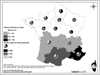 |
Fig. 1 Pastoral areas in France (2018). Les surfaces pastorales en France (2018) |
2.3 Our key references
The working group has based its work on five recently published key documents on different aspects of pastoralism: Agroécologie et pastoralisme (Jouven, 2016); Pâturages : nourrir ses bêtes et vivre de l’élevage (Dupré et al., 2015); L’économie agropastorale revisitée (Aubron et al., 2019); Fourrages et pastoralisme (Nozières‐Petit et al., 2021a); Berger, un sacré métier. Travail salarié en milieu pastoral; attractivité, vivabilité, pérennité des métiers” (Chauvat and Doré, 2022). The group also relied on two older contributions: Pratiques d’élevage extensif (Landais and Balent, 1993) and Utilisation par les ruminants des pâturages d'altitude et parcours méditerranéens” (Molénat and Jarrige, 1979).
3 Recent pastoral dynamics in France: fragilization, adaptation, and emergence
Despite its unique characteristics, the dynamics of pastoral livestock farming in France are similar to those of general livestock farming in the country: an increase in herd size per farm, a decline in the number of workers, a reduction in or simplification of grazing in favor of stored resources cultivated on arable land, and growing dependence on Common Agricultural Policy (CAP) subsidies. These general trends are leading to a decline and weakening of pastoral practices. However, we are observing the existence or emergence of forms of pastoral redeployment, often with the support of local authorities, in order to mitigate the risk of wildfires, maintain open environments, preserve both ordinary and remarkable biodiversity (Garde et al., 2020; Eychenne, 2025), where else collectively ensure the provision of food resources for animals, and facilitate the closure of cycles in cultivated areas (Moraine et al., 2022). These initiatives can take various forms, such as “winter transhumance,” which involves the migration of grazing animals from Alpine or Andorran farms to Mediterranean areas (Malzac et al., 2024), or of grazing herds from Limousin to the Causses du Lot (Morsel, 2024).
3.1 From an economic and social perspective
The productive function dictates the structuring of pastoral livestock farming. Sheep and goat production dominates, with cattle and horse farming also playing significant roles. Pastoral livestock farming is characterized by the diversity of its products, such as wool, manure, milk, meat, as well as by the variety of methods and degrees of processing (Nozières‐Petit et al., 2021b). In addition, pastoral systems generally exhibit lower productivity levels and their products are relatively more heterogeneous in terms of quantity, quality, and seasonality. These products are thus often promoted through quality and origin certifications (Signes officiels de la qualité et de l'origine, SIQO), particularly geographical indications (GI), which highlight their distinctive characteristics and help livestock farms avoid competition based on volume. However, Aubron et al. (2014) and Drevon et al. (2025) point out that pastoralism is incorporated in certification specifications in many different ways. They also note the tensions and trade‐offs inherent within GI approaches, particularly the dichotomy between deriving value from local resources and meeting market challenges and requirements. Consequently, a number of pastoral farmers have adopted marketing strategies that rely primarily on short supply chains, irrespective of whether they produce under SIQO.
The incomes of all herbivore farmers, as well as of those raising pigs on pasture, is highly dependent on CAP subsidies, chiefly through the Basic Payment Scheme (BPS). Following the allocation of BPS to pastoral areas in 2010, and of consolidation measures in 2015, this aid has become increasingly important for pastoral systems. In the suckler sector, for instance, this aid constitutes the entirety of farmers’ incomes (Aubron et al., 2019). Furthermore, during the 2014–2015 CAP reforms, the eligibility criteria for pastoral areas underwent significant modifications, in particular with respect to the consideration of areas in proportion to their ineligible elements (e.g., rocks, ponds) and woody resources. Another significant change in the rules is the direct allocation of payments to individual farmers rather than to summer pasture management groups. These two changes have led to transformations in the functions and management of these pastoral areas (Gross and Trouvé, 2019). In addition to BPS, the Compensatory Allowance for Natural Handicaps and, in some cases, additional regional aid exacerbate this dependence.
The organizations providing support to farmers are also diversifying. They include multiple professional structures, administrative authorities, and environmental entities. In addition, pastoral farming professions face challenges that are similar to those experienced by other farming systems: the growing importance of gender issues; the diminishing appeal of occupations and the necessity of workforce revitalization; the improvement of working conditions, particularly in summer pastures; and the capacity to manage the uncertainties associated with and the stress resulting from wolf predation, multiple land uses, and administrative complexities (Doré and Nicolas, 2022).
3.2 From a risk perspective
Pastoral systems have historically employed specific practices, primarily involving animal mobility, to address climatic hazards in pursuit of enhanced security. However, these systems remain vulnerable to the intensification and diversity of these hazards, which is altering the scope of challenges they have to face and potentially narrowing their range of viability (Jouven et al., 2022). The characteristics of animals (ability to mobilize body reserves, watering needs, longevity, ability to walk, and, increasingly, the ability to withstand extreme heat), and, more generally, the sources of herd flexibility are being increasingly called upon, through appropriate selections of herd sizes and animal categories, and through recourse to the diversity and complementarity of animal types (Nozières et al., 2011; Dumont et al., 2013). Furthermore, the strategic sequencing of grazing periods and the proactive management of the lean inter‐season periods have become imperative (Moulin et al., 2001), as have gaining access to new grazing areas. In this respect, the forest can be regarded as a pastoral resource (Garde et al., 2020), one that also provides shade. The co‐management of the forest as a resource for both foresters and livestock farmers can be considered and may lead to changes in management practices (e.g., planting of complementary species). In most cases, the objective is the reclamation of land that was previously used for grazing but later abandoned, sometimes then becoming covered by woody vegetation. This silvo‐pastoral practice not only provides nutrition to livestock herds but also helps prevent wildfires (Hubert, 2020). Collective rules governing the use of high‐altitude pastures (entry and exit dates, number of animals, sanitary treatments, etc.), annual declarations of animals and land area to claim CAP benefits, and very strict specifications for GI production are undermined by fluctuations in resources on the plains and valley floors before the ascent to summer pastures or at the time of return. However, high‐altitude pastoral regions are also increasingly vulnerable to the effects of drought and, above all, to rising temperatures (Rigolot et al., 2014; Nettier, 2016). In general, farmers and shepherds must adapt to greater inter‐annual and intra‐seasonal climate variability, which is still difficult to predict in the short term, as well as to changes in rainfall patterns and the associated changes in vegetation. This situation is further exacerbated by the recurrent emergence of epizootic diseases, such as the vector‐borne malignant catarrhal fever. Furthermore, biosecurity requirements are becoming increasingly stringent, even though pastoralism often entails the mixing of herds during the summer grazing season and, more generally, the cohabitation of wild and domestic species in outdoor environments. Research on Corsican pastoral pigs demonstrates how a specific practice of pasture fattening and maintenance of a local breed is carried out in a context of possible interactions with wild boars, which can facilitate the transmission of diseases (Loeillot et al., 2025).
3.3 From a predation perspective
Since the early 1990s, predation has emerged as a significant factor influencing the dynamics of pastoral systems, particularly with the return of wolves, a species that is legally protected at the European level (Meuret et al., 2021), and, to a lesser extent, of bears, which are also protected. The issue of predation is intricate and a source of controversy and tension (Doré and Nicolas, 2022; Doré 2025). The problem persists despite the implementation of protective measures, including guard dogs, secure fencing, and additional shepherds, along with defensive shooting around herds deemed to be at high risk of predation. As documented by Meuret et al. (2021), the annual loss of livestock, predominantly sheep, has exceeded 10,000 heads since 2017. Research conducted by the Coadapht network (https://www.coadapht.fr/en) has revealed that these protective measures have profound implications not only in mountainous regions but also on plains and valley floors where sheep are typically herded in batches on pastures. The findings indicate the necessity for implementing substantial changes in farming practices (Nozières et al., 2017; Sagot and Moulin, 2020). One such practice, albeit drastic, would be of the complete confinement of sheep in buildings, primarily in dairy sheep systems, resulting in the abandonment of both pastoral areas and cultivated forage areas. At a more general level, international environmental associations are promoting a project to acquire land and “rewild” agropastoral spaces (Barraud et al., 2019). After domestic animals are removed, this project aims to restore the landscape to its natural state that existed before human activity transformed it. This objective is to be achieved through the reintroduction of large wild herbivores, such as tarpan, bison, and reconstituted aurochs (Rapuc et al., 2025). Paradoxically, humans would still have a presence, but only as ecotourists (Lescureux, 2024).
3.4 From a perspective of interactions with other users and managers of rangelands
Territorial dynamics, particularly in the context of increasing multi‐use of recreational spaces, along with the broader challenges confronting local society, are prompting a rethinking of the interactions between livestock farming, farmers, territorial spaces and actors, and public policies. Indeed, the expectations of the latter from livestock farming are neither uniform nor trivial (Lasseur et al., 2019). Despite the impact of climate change on ecological processes, pastoral management practices remain the primary factor influencing these dynamics (Loucougaray et al., 2021). Moreover, the governance of ecosystem services necessitates collective action and/or multi‐stakeholder processes (Barnaud et al., 2019), as well as the land planning to mitigate its vulnerability to wildfires (Couix and Hubert, 2012; Magnani 2025). But these territorial dynamics can be analyzed through alternative lenses, including the livestock farming practices that shape them, the distinctive products they generate, and the landscapes from which they derive value. The nature of interactions, such as those between livestock farming and tourism activities, around the same pastoral resource – in the broadest sense – has to form the fundamental structure of the analyses. Finally, issues of animal health and interactions between animal and human health are renewing the concept of the “territorial governance of health risks” in pastoral regions. This encompasses animals, livestock farmers, hunters, veterinarians, and administrative authorities (in particular, the veterinary services department), working in a concerted manner to address epizootics and to prevent these risks (Gisclard et al., 2021).
It is this very practice of grazing livestock on natural vegetation as fodder that endows these farms with both strengths and weaknesses, as well as resilience against and vulnerability to multiple risks and constraints.
4 The pressing issues that need addressing for tomorrow's pastoral systems
This assessment has led the working group to identify six areas of research to better understand and support current and future developments in pastoralism in France. These areas are subjects for debate and adaptation, with actions to be identified and then implemented by various scientific, professional, political, and other stakeholders.
4.1 Pastoralism: an agroecological model of interest for the transition of other forms of livestock farming?
The study of pastoral systems through the framework of agroecological principles (Wezel et al., 2020) offers two potential avenues for exploration: i) assessment of how these systems can be leveraged to transform other livestock systems, and ii) transformation or modification of systems with a pastoral component to address the socio‐economic and climate challenges that confront them.
By its very definition, pastoralism is based on the renewal of a diversity of plant resources, some of which are spontaneous, and their use through grazing by mobile animals. It is considered one of the ideal types of agroecology in livestock farming (Dumont et al., 2013; Garde et al., 2016). The study and management of these systems requires the capacity to observe the environment, animals, and their interactions, as well as the ability to “cope with” the environment, hazards (spatio‐temporal variability), and uncertainty (climate, predation, etc.). “Coping with” does not imply inaction; rather, it signifies a major challenge in ensuring the durability and security of these systems. It is important to note that this perspective is at odds with the logic of “acting upon,” which involves the artificialization of the environment and of security measures in an attempt to control nature (Lemery et al., 2005). In this sense, systems with a pastoral component can be regarded as a useful model of “coping with” for planning the agroecological transition of livestock systems towards the use of grassland resources or of natural and diversified resources in many French regions and elsewhere. From a climate change mitigation perspective, pastoral systems generally have a relatively high carbon footprint per product unit due to their low animal productivity (FAO, 2018). However, they have been shown to increase soil organic carbon stocks through the processes of grazing and natural manure recycling, thus partially compensating for their emissions (Maillard and Angers, 2014). Indeed, when the ecosystem services provided by pastoral systems, such as biodiversity conservation, are taken into account, their overall carbon footprint can be lower than that of so‐called “intensive” livestock systems (Ripoll‐Bosch et al., 2013; Bernués, 2017).
However, an unequivocal commitment to a process of change towards agroecology (the transition) is lacking in pastoral systems. Many situations exhibit a clear shift towards the preferential use of cultivated land and stocks (with inputs). Moving towards greater agroecology therefore requires the exploration of avenues for pastoral redeployment, a process that encompasses numerous factors. These include herd composition, herd size, reproduction, herd productivity, breeds and species, products, and the diversity of herbaceous, shrubby, and woody resources on rangelands, as well as their organization with other resources.
Even in pastoral systems that still benefit from a diversity of resources, farms are finding it difficult to adapt and subsist, and this is a topic that needs further study. The resilience of pastoral systems to hazards, their integration into profitable markets, incomes, and working conditions are all subjects of debate. The same is true of the conditions and trajectories for entering a profession dominated by daily animal care and the management of complexity and uncertainty at different scales of time and space (Landais and Balent, 1993).
Virtuous adaptation trajectories (reduced inputs use, maintenance and renewal of rangelands, and high‐quality production) need exploration, especially in the context of biodiversity loss and climate change. Indeed, the latest IPCC report underscores the perils and challenges posed by climate change, while concurrently delineating strategies for adaptation and mitigation. It identifies the Mediterranean basin as a region of particular vulnerability to these changes. Livestock farms in these areas, although designed to be resilient, may be compelled to confront changes of unknown magnitude that could imperil their viability. Livestock farming is experiencing adverse effects due to these disruptions, which have a detrimental impact on food resources and animal health, and consequently lead to lowered production.
4.2 Animals in pastoral situations: specific expectations?
The ability of animals to cope with increasingly frequent hazards is a key element of the resilience of pastoral systems. Practices that can improve herd resilience in pastoral farming must combine: (i) the selection and management of one or more animal species (Martin et al., 2020) and/or of one or more breeds or animal populations (possibly crossbred) (Magne et al., 2019); (ii) the management of herd renewal and reforms (Moulin and Perucho, 2023); and (iii) the adoption of diversified production trajectories through batching and reproduction seasons choices (Tichit et al., 2004), ensuring that periods of stress affect animals with different productive histories. Habits acquired on pasture (“herd culture” – Despret and Meuret, 2016) contribute to managing heterogeneity of resources. They thus transform from a handicap into an opportunity to provide high‐quality nutrition for animals and promote resource renewal (Meuret, 2006; Meuret, 2010b). Furthermore, collective population management shapes the aptitudes of breeds or genotypes in the medium to long term, providing farmers with a lever for adaptation, but only under certain organizational, technological, cultural, cognitive, and economic/market conditions (Magne and Quénon, 2021). There is no doubt that the diversity of genetic resources is a lever that should be better mobilized to strengthen the ability of animals to utilize spontaneous plant resources. It is also important to consider the inherent characteristics of breeds, particularly in regards to “hardiness” (Brunschwig and Blanc, 2011). In this respect, adapted and/or adopted local breeds (Perucho et al., 2021) play an essential role. However, the relationships between local animal populations and the pastoral components of systems have received little particular attention (Zonabend‐König et al., 2016), especially with regard to the specific interactions between genotype and the environment in the broad sense. Intra‐ and inter‐breed variability can be used to reinforce specific aptitudes necessary for pastoralism in a context of rising temperatures by involving behavioral, physiological, or metabolic adaptation traits.
In general, the trade‐off between production and adaptation in selection remains a thorny issue in pastoralism, given the difficulty of considering adaptation traits holistically. There is a constant fear of their deterioration through a selection process that focuses too much on production traits. The more difficult the conditions, the more important it is to preserve adaptation traits. It is therefore necessary to redesign the selection criteria at the breed level in a participatory manner with the relevant communities (Haile et al., 2020), and also define the most pertinent performance indicators. At the farm level, it is necessary to rethink the modalities of genetic diversity that promote resilience.
Animals in pastoral environments also drive an ecological transformation of vegetation cover through grazing, trampling, and excrement (Dumont et al., 2012). Herds modify landscapes through carrying capacity, batching, and dispersion of animals in space (Caplat et al., 2006; Mottet et al., 2006). They can even reduce the landscapes’ susceptibility to wildfires. These dimensions are all the more important given that grazing, as a positive ecological factor, may be called into question in favor of returning lands to wild natural states. Additionally, certain expectations focus more on the grazed vegetation cover (biodiversity) and landscapes than on the herd itself.
4.3 Pastoral territories are multi‐stakeholder territories: how should interactions be reconfigured?
Pastoral activities extract value from areas that are often extensive and difficult to access or observe, usually located outside of farm boundaries and having complex land tenure statuses. These areas are of interest to a wide variety of stakeholders (Lauvie et al., 2021) and are subject to multiple regulations. One challenge is accounting for the different forms of interaction between the diversity of livestock systems and territories, the modalities of use of rangelands by herds, and ecological dynamics (under‐ or over‐use of grazing areas, with resultant impacts on biodiversity and soils), and to model the impact of changes (Mottet et al., 2006), especially in the medium to long term. Another challenge is understanding the diversity of views on rangelands and attempting to reconcile them to reinforce the multifunctionalities of these areas and draw value from them (Ickowicz et al., 2022). These points of view may stem from a wide range of interests, such as the promotion of products or forms of livestock farming using quality labels (Dobremez et al., 2014), the development of tourism and the local economy, the diversification/reconfiguration of outdoor leisure activities, water management, carbon storage through increased forest cover, and the rewilding of sparsely populated areas (Lauvie et al., 2021).
In addition, pastoral livestock farming fulfills various functions, including animal production; preservation of open environments and biodiversity; reduction of the risk of wildfires and torrential rains; economic dynamism through indirect seasonal and permanent jobs; and conservation of local breeds and plants of interest. It is also a symbol of territorial attractiveness, featuring typical products and landscapes with animals in motion, and it incorporates landscape elements with multiple purposes, including aesthetic, recreational, symbolic, and identity‐affirming ones. The issues are therefore very locally rooted and call for approaches that encourage the exchange of views and collective processes for action, such as managing common resources with livestock farming, finding compromises between uses, and promoting the maintenance of system diversity and positive territorial dynamics (Lasseur et al., 2019; Servière et al., 2019). This set of analyses is an essential element for designing and developing public policies specific to pastoralism, as well as more general policies (CAP, market or territorial development policies) on which this activity is, as we have noted, highly dependent.
It is also necessary to elucidate and support interactions between territories (with cultivated areas, woodlands, or vineyards) as well as between management actors. Although there are obvious technical complementarities, the values underpinning efforts to integrate activities are not necessarily shared, and the organizational levers to do so must be specified.
4.4 Occupations of pastoralists
Pastoralism encompasses various occupations that are perceived not only as professional worlds – combinations of norms, values, and practices (Coquil et al., 2017) – but also as statuses (e.g., farmer, family worker, salaried summer shepherd) and conventions between individuals from similar or different backgrounds (livestock farmers, public or private landowners, hunters, urban or rural dwellers) or groups (farmer and/or citizen associations, pastoral groups, etc.). While we will not discuss the professions of development agents (pastoral technical services) here, they also warrant specific consideration.
Dupré et al. (2015) note an essential commonality among these “nature workers” who are livestock farmers and shepherds: “based on a close relationship with living things, both animal and plant, livestock farming requires specific knowledge. The professional cultures associated with these grass‐based (or leaf‐based, or lichen‐based, etc.) livestock farms are based in particular on complex skills that take years to acquire, passed down by predecessors, and consisting of observations, communication, intuition, sensations, interactions […]. The knowledge involved has in common, on the one hand, technical and social intelligence in relation to the environment and to natural resources and, on the other, its adaptive capacity. What is being built is a true culture – in the anthropological sense of the term – of interactions between humans, animals, natural environments, and resources.”
The occupation of herding and of shepherding is undoubtedly the most studied. Legeard et al. (2010) identify as many as eleven categories of practitioners among the diversity of those responsible for shepherding just sheep and goats. Herders must design a grazing circuit for each half‐day that corresponds to a large meal for the animal and stimulates ingestion of different types of pasture vegetation (Meuret, 2010b). They must also be able to organize the sequence in which grazing areas within a territory are used over the course of a season (Landais et al., 2020). The attractiveness and future of this profession are in question, with Chauvat and Doré (2022) pointing out that “being a shepherd means working in an uncertain environment, buffeted by climate change, predation, increased tourist traffic in natural and pastoral spaces, changes in public policy, legislative frameworks and access to the profession and training, and diversification of the tasks and profiles of the herders themselves…. Nevertheless, these professions are deeply engaging for those who practice them and for their families.”
Finally, the significant contribution of individuals from non‐agricultural backgrounds to occupations of pastoralism, such as newly installed livestock farmers (Nozières‐Petit et al., 2021c) and salaried shepherds (Legeard et al., 2010) is notable and provides illuminating examples and perspectives. The specificities of their entry into the profession deserve to be refined, both for the original experiences they bring as well as for understanding and supporting the learning processes they are likely to undergo. This in a context in which short‐term careers are much more likely, and fewer and fewer farmers’ children are following in their parents’ footsteps by taking over their heritage and activities.
4.5 How, then, can the sustainability and multi‐performance of pastoral livestock farming be analyzed?
The specific characteristics of the pastoral world make it difficult to analyze and evaluate the performance of pastoral systems, both at the farm and territorial levels. Multiple approaches to livestock farming systems are required: multi‐performance approaches that combine efficiency, productivity, ecosystem services, resilience, employment, etc.; agroecological transition approaches (with its principles – Dumont et al., 2013; Tichit and Dumont in Jouven et al. 2016; Wezel et al. 2020); and approaches focused on sustainability, with its economic, environmental, and social components the ability to withstand an uncertain environment over the long term, and the projection onto intergenerational dimensions. Indeed, the multifunctionality of pastoralism (forms of livestock farming and types of spaces) requires a rethinking of the criteria and indicators used to assess both internal sustainability (focused on systems and their properties in an uncertain environment) and external sustainability (vis‐à‐vis local stakeholders and society) (Servière et al., 2019; Ickowicz et al., 2022).
The issue of deriving value from pastoral products must be explored at the intersection of these issues. The objective is to support the productive function of pastoral activities, particularly in the more lucrative systems favored by pastoral livestock farmers, such as supply of SIQO products and/or use of short supply chains, while promoting more agroecological production methods. GI initiatives, in particular, are subject to tensions between deriving value from local resources, highlighting the link to the terroir, which structures the production process, and the short‐term management of a variety of uncertainties, especially those related to the climate and markets. Furthermore, although these initiatives are based on fairer modes of governance, equitable distribution of value is not always assured. Indeed, these products contribute to the incomes of livestock farmers in widely varying proportions.
The relationship between pastoralism and society requires rethinking beyond just the territorial aspect. It certainly cannot be reduced to a confrontation between extensive farming and industrial farming, with extensive farming being supported on principle because it is more ecological and eschews practices and housing methods that are detrimental to animal welfare. There is little specific research into animal welfare in pastoral environments and it undoubtedly deserves special attention in order to define what characterizes pastoral situations from the perspective of animal ethology, both individually and collectively. The goal would be to document animal welfare without being constrained by references to indoor farming conditions. Ultimately, the question is how to best support animal welfare in pastoral systems. A segment of society that was once attracted to the pastoral model is now turning away from it. Some are doing so as part of a general rejection of animal exploitation (veganism), while others are trying to highlight the harmful effects of livestock farming in the form of erosion and degradation of mountain pastures, which, in their view, are now candidates for “rewilding” (Rapuc et al., 2025).
4.6 What data is necessary to understand the ongoing transformations and develop future scenarios?
Different types of data help monitor and understand the dynamics of livestock farming and rangelands in France:
Data on livestock farming systems and livestock populations in agro‐pastoral regions, as well as on movements to and from high‐altitude pastures. These data are mainly collected by government agencies and technical institutes, or during research on livestock farming systems (functioning and processes) (Dedieu et al., 2008; Inosys, 2025) for the purposes of understanding farms, their structures, herd management, land use, marketed products, and income generation;
Data on vegetation in rangelands produced by nature conservation organizations, national and regional parks, and researchers in ecology and animal science These are inventories of flora and fauna carried out during studies of areas to be protected or at regular intervals in agriculturally or ecologically interesting pastures and rangelands (e.g., measurements taken by the “Sentinel Alpine Pasture” program – Dobremez et al., 2014);
Data focused on more specific observations, most often using a cartographic representation, (in particular the pastoral survey): suspected or confirmed attacks by wolves, condition of shepherds’ huts, etc.
Several questions can be asked about these data sources: What do they cover? Whether and how they can be linked in terms of scale and subject matter? What are the explanatory models of temporal and spatial processes? Data sources frequently concentrate on a particular process, thus making it difficult to link climate change, changes in land use, ecological dynamics, changes in biodiversity, and agricultural dynamics. Finally, to expand the range of available data, it is necessary to utilize digital tools such as GPS tracking of lead animals or remote sensing.
Moving beyond a merely retrospective or comprehensive approach, using data for scenario planning raises different questions about the nature and structure of data, as well as about its inclusion in participatory processes. Given the current state of data fragmentation, it is evident that this objective remains significantly elusive.
5 Discussion and conclusion
There are certainly many similarities between the drivers of change in “what constitutes pastoralism” in France and the rest of the world, as well as in the themes we have outlined. The most appropriate basis for comparison is undoubtedly that provided by the “(Agro)pastoralism in Africa” symposium, focused primarily on sub‐Saharan Africa, organized in November 2024 by the Pôle Pastoral en Zones Sèches (https://www.ppzs.org) and the West and Central Africa advocacy group for the International Year of Rangelands and Pastoralists (https://iyrp.info/sites). Commonalities include mobility, which is an integral part of pastoralism; the sensitivity of livestock and rangelands to climate change; and watering issues. Other common aspects are the shift from pastoralism to agropastoralism and the mobilization of diversified resources throughout the seasons. Similarly, the growing importance of agri‐chains in the batching of herds and in determining the type of mobility of each group (lambs for Tabaski, cows milked close to families, male cattle and dry cows moved seasonally, in West Africa) can be observed in different forms in France (lambs in sheepfolds, groups of heifers moved seasonally, etc.) (Manoli et al., 2014). Finally, transhumance relies on wage labor in both France and West Africa.
There are, of course, many differences between situations in France and sub‐Saharan Africa, the most prominent being the safety nets available to French livestock farmers, primarily through CAP subsidies and the development opportunities offered by quality labels, which are very prevalent. Additionally, land‐related and societal impediments to herd mobility are much more acute in West Africa, where they are compounded by pervasive violence, particularly between herders and farmers, which can often assume political, ethnic, and religious dimensions. While land‐tenure matters are included in the formal measures put in place to ensure the maintenance and redeployment of pastoral livestock farming in France (grazing agreements, pastoral pacts – Barrière and Bes, 2017), verbal agreements also play an important role. In contrast, customary agreements dominate in West Africa, but are undermined by tensions arising from the search for new pastures due to droughts. It is imperative that local actors and public authorities possess the capacity to enforce these agreements to ensure the preservation of rights of way and access to grazing areas. If we consider the emerging tensions associated with rewilding in France, it can be said that both France and West Africa share a strong tendency to associate “pastoralism” with “conflict,” albeit with varying degrees of intensities and levels of violence. Therefore, it is necessary to promote dialogue between stakeholders that is respectful of cultural traditions while also leveraging innovative methodologies and tools to promote engagement and dialogue. Thus, maintaining the societal visibility of pastoralism and transhumance is fundamental to initiatives such as the recognition of the Causses and Cévennes as a “cultural landscape of Mediterranean agropastoralism” by UNESCO. Finally, pastoralism in West Africa and in many other regions of the world is a “total social fact” (Bonfiglioli, 1988), i.e., it engages an entire society around animals, territories, and the people responsible for their care and movement. This phenomenon stands in contrast to France, where pastoralism is more closely associated with a profession, work, employment, skills, and know‐how (Meuret, 2010a; Chauvat and Doré, 2022). However, the organization of work and associated occupations for family workers and employees are becoming increasingly relevant topics in African research. The value of a comparative approach between pastoral situations in France and West Africa, a method that has been previously tested, is reaffirmed here. This approach could be extended to other pastoral contexts in Europe, North Africa, East Africa, and the rest of the world.
In France, research is fully focused on the ongoing changes affecting livestock farming, agri‐chains, biodiversity, livestock farmers and shepherds, territorial actors, public actors, associations, and extension entities. Our proposal to explore the six themes presented above in greater depth emphasizes that the challenges facing pastoralism cannot be met without the ability to coordinate different organizational levels – from animals and vegetation cover to farms and territories – and without mobilizing approaches from the biotechnical sciences, ecology, modeling, and the social sciences Two limitations of our perspective can be identified. First, we have not covered development actors, such as pastoral technical services and park rangers, in terms of their missions, actions, and related professions. Second is the necessity of adopting a long‐term perspective, transcending mere adaptation to hazards and shocks, in order to develop forward‐looking scenarios. This requires considering pastoralism not only as a repository of essential experiential knowledge but also as an increasingly technologized agricultural model subject to climate change, in a context in which climate change is testing the capacity for renewal and maintenance of both pastoralists and the land grazed by their animals.
The inherent complexity of pastoralism has historically been under‐represented in research, primarily due to its dualistic nature. On the one hand, it is a specific form of livestock farming involving rangelands, mobility, the outdoors, and diversified resources, thus helping to produce high‐quality products for human consumption. On the other hand, because of their biodiversity, these pastoral areas attract interest from various actors: society at large, local communities, farmers, and the animals that feed on them. Incorporating this dual nature into future research remains a major challenge.
Acknowledgments
The authors offer their thanks to the members of the INRAE – IYRP network: C. Aubron, M. Boval, F. Bray, P. Carrère, N. Couix, E. Crouzat, B. Dedieu, C. Deleglise, M. Dervillé, E. Deschamps, D. Drevon, JP. Dubeuf, N. Garambois, L. Garcon, F. Guerrieri, M. Gisclard, N. Gross, D. Hazard, B. Hubert, R. Jary, M. Jouven, H. Larroque, J. Lasseur, A. Lauvie, M. Le Goff, F. Louault, S. Magnani, M.‐A. Magne, C. Manoli, M. Meuret, M. Moraines, C.‐H. Moulin, C. Napoleone, M‐O. Nozières‐Petit, H. Rapey, E. Richard‐Frève, F. Stark, A. Stockes, B. Trabucco, L. Vincent.
Funding
This work was funded by INRAE and by the PRIMA Program 2023 under the PasAgroPas project (PRIMA/0016/2022) and the French national Research Agency (ANR‐23‐P012‐0009).
References
- Agreste. 2023. Les résultats technico économiques des exploitations agricoles en 2021. Dossier n°6, https://agreste.agriculture.gouv.fr/agreste‐web/download/publication/publie/Dos2306/1PagesdeDossiers2023‐6_CCAN‐ChapitreI.pdf. [Google Scholar]
- Aubron C, Peglion M, Nozières MO, Boutonnet JP. 2014. Démarches qualité et pastoralisme en France. J Alpine Res 102(2). https://doi.org/10.4000/rga.2442. [Google Scholar]
- Aubron C, Garambois N, Nozières‐Petit MO. 2019a. L’économie agropastorale revisitée. Avignon (France): Association Française de Pastoralisme, Cardère éditeur, 136 p. [Google Scholar]
- Aubron C, Latrille M, Lhoste V. 2019b. Dynamiques agraires dans les Causses et Cévennes. Limites d'un développement centré sur l'accroissement de la productivité physique du travail et émergence d'alternatives. In : Aubron C, Garambois N, Nozières‐Petit MO, eds. L’économie agropastorale revisitée. Avignon (France): Association Française de Pastoralisme, Cardère éditeur, pp. 19‐42. [Google Scholar]
- Barnaud C, Corbera E, Muradian R, Salliou N, Sirami C, Vialatte A, et al. 2018. Ecosystem services, social interdependencies, and collective action: a conceptual framework. Ecol Soc 23(1): 15. https://doi.org/10.5751/ES-09848-230115. [Google Scholar]
- Barraud R, Andreu‐Boussut V, Chadenas C, Portal C, Guyot S. 2019. Ensauvagement et ré‐ensauvagement de l'Europe : controverse et postures scientifiques. Bulletin de l'association des géographes français 96(2) 301‐318. https://doi.org/10.4000/bagf.5141. [Google Scholar]
- Barrière O, Bes C. 2017. Droit foncier et pastoralisme, entre propriété et territoire. Vertigo 17(1). https://doi.org/10.4000/vertigo.18362. [Google Scholar]
- Bernués A. 2017. Animals on the land: Ecosystem services and disservices of grazing livestock systems. In : D’Silva J, Webster J, eds. The meat crisis: Developing more sustainable and ethical production and consumption, 2nd ed. London: Earthscan, pp. 67–92. [Google Scholar]
- Bonfiglioli AM. 1988. Dudal. Histoire de famille et histoire de troupeau chez un groupe Woodabe du Niger. Paris (France): Maison des Sciences de l'Homme/Cambridge University Press, 293 p. [Google Scholar]
- Brunschwig G, Blanc F. 2011. Rusticité et résilience des systèmes d'élevage pastoraux. In: Hubert B, ed. La rusticité, l'animal, la race, le système d'élevage ? Pastum hors‐série. Avignon (France): Cardère Editeur, p. 39‐46. [Google Scholar]
- Caplat P, Lepart J, Marty P. 2006. Landscape patterns and agriculture: modelling the long‐term effects of human practices on Pinus sylvestris spatial dynamics (Causse Mejean, France). Landsc Ecol 21: 657‐670. https://doi.org/10.1007/s10980‐005‐4430‐1. [Google Scholar]
- Chauvat S, Doré A. 2022. Berger, un sacré métier. Travail salarié en milieu pastoral; attractivité, vivabilité, pérennité des métiers. Paris (France): AFP, Cardère Editeur, 104 p. [Google Scholar]
- Coquil X, Dedieu B, Beguin P. 2017. Professional transitions toward sustainable farming systems: the development of farmers professional worlds. In: Beguin P, Duarte F, eds. Work special issue: work and sustainable development. Work 57 (3). https://doi.org/10.3233/WOR‐172565 [Google Scholar]
- Couix N, Hubert B. 2012. La contextualisation des recherches en environnement : une approche multiscalaire et multi‐acteurs en Cévennes. Nat Sci Soc 20(4): 425‐436. https://doi.org/10.1051/nss/2012045 [Google Scholar]
- Couix N, Gaillard C, Lauvie A, Mugnier S, Verrier E. 2016. Des races localement adaptées et adoptées, une condition de la durabilité des activités d’élevage. Cahiers Agric 25: 650009. https://doi.org/10.1051/cagri/2016052 [Google Scholar]
- Dedieu B, Faverdin P, Dourmad JY, Gibon A. 2008. Système d’élevage, un concept pour raisonner les transformations de l’élevage. INRA Prod Anim 21(1): 45‐58. https://doi.org/10.20870/productions‐animales.2008.21.1.3374 [Google Scholar]
- De Roincé C, Seegers J. 2020. Etude prospective du pastoralisme français dans le contexte de la prédation exercée par le loup. Rapport pour le Ministère de l'Agriculture et de l'Alimentation. 309 p. https://agriculture.gouv.fr/etude‐prospective‐du‐pastoralisme‐francais‐dans‐le‐contexte‐de‐la‐predation‐exercee‐par‐le‐loup [Google Scholar]
- Despret V, Meuret M. 2016. Composer avec les moutons : lorsque des brebis apprennent à leurs bergers à leur apprendre. Avignon (France): Cardère Editeur, 154 p. [Google Scholar]
- Dobremez LB, Nettier JP, Legeard B, Caraguel L, Garde S, Vieux S, et al. 2014. Les alpages sentinelles. Un dispositif original pour une nouvelle forme de gouvernance partagée face aux enjeux climatiques. Revue de géographie alpine 102(2). https://doi.org/10.4000/rga.2165. [Google Scholar]
- Doré A, Nicolas F. 2022. Infrapolitiques des paniques morales : faire face et faire sens de «la guerre du loup». Emulations‐Revue de sciences sociales (41): 165‐188. https://doi.org/10.14428/emulations.041.08 [Google Scholar]
- Doré A. 2025. Politiques du loup. Faire de la sociologie avec les animaux. Presses Universitaires de France, 464 p. [Google Scholar]
- Drevon D, Cornu P, Nozières‐Petit MO. 2025. Pastoral resources and quality signs: from construction to deconstruction? Some cases in the South‐East of France. XII International Rangeland Congress, Adelaïde, Australia, June 2‐6, pp. 1609–1613. [Google Scholar]
- Dumont B, Fortun‐Lamothe L, Jouven M, Thomas M, Tichit M. 2013. Prospects from agroecology and industrial ecology for animal production in the 21st century. Animal 7(6): 1028 1043. https://doi.org/10.1017/S1751731112002418. [Google Scholar]
- Dumont B, Rossignol N, Loucougaray G, Carrère P, Chadoeuf J, Fleurance G, et al. 2012. When does grazing generate stable vegetation patterns in temperate pastures? Agric Ecosyst Environ 153: 50‐56. https://doi.org/10.1016/j.agee.2012.03.003. [Google Scholar]
- Dupré L, Lasseur J, Poccard‐Chapuis R. 2015. Pâturages : nourrir ses bêtes et vivre de l’élevage : une introduction. Techniques & Culture 63: 22‐35. https://doi.org/10.4000/tc.7366. [Google Scholar]
- Eychenne C. 2025. La revanche des brebis, des broussailles et des bergers. Réflexions géographiques pour une nouvelle idylle pastorale. Dossier pour l'habilitation à diriger des recherches, Géographie, volume 2, Université Clermont Auvergne, 231 p. https://shs.hal.science/tel‐05191597v1/file/HDR_EYCHENNE_INEDIT_HAL.pdf [Google Scholar]
- FAO. 2018. Climate change and the global dairy cattle sector‐The role of the dairy sector in a low‐carbon future. Rome, Italy. 36 p. https://openknowledge.fao.org/bitstreams/8749a956‐0725‐414f‐8c35‐58a5db0c2b5c/download [Google Scholar]
- FAO, ILRI, IUCN, FAO, WWF, UNEP, ILC. 2021. Rangelands Atlas. Nairobi Kenya: ILRI. 42 p. https://hdl.handle.net/10568/114064 [Google Scholar]
- Garde L, Aussibal G, Meuret M. 2016. Des pratiques pastorales qui prennent sens au regard de l'agroécologie. In: Jouven M. (dir.), L'agroécologie : du nouveau pour le pastoralisme ? Séminaire AFP 2015, Pastum, pp. 39‐48. https://cardere.fr/doc/X‐RP29.pdf [Google Scholar]
- Garde L, Beylier B, Bonnet O, Thavaud P, Debit S, Golé S. 2020. Sylvopastoralismes : forêt méditerranéenne et élevage pastoral, une alliance à renouveler. Forêt Méditerranéenne 41(3): 203‐210. [Google Scholar]
- Gisclard M, Charrier F, Trabucco B, Casabianca F. 2021. From National Biosecurity Measures to Territorial ASF Preparedness: The Case of Free‐Range Pig Farming in Corsica, France. Front Vet Sci 8. https://doi.org/10.3389/fvets.2021.689163. [Google Scholar]
- Gross C, Trouvé A. 2019. Politique agricole commune, emploi et agropastoralisme. In: Aubron C, Garambois N, Nozières Petit MO, eds. L’économie des régions agro‐pastorales revisitée. Pastum hors‐série, Association Française de Pastoralisme et Cardère éditeur, pp. 113‐120. [Google Scholar]
- Haile T, Getachew T, Mirkena G, Duguma S, Gizaw M, Wurzinger J, et al. 2020. Community-based sheep breeding programs generated substantial genetic gains and socioeconomic benefits. Animal 14(7): https://doi.org/10.1017/S1751731120000269. [Google Scholar]
- Hubert B. 2020. Le sylvopastoralisme, un projet intégrateur. Forêt Méditerranéenne 3: 1‐4. https://www.foret‐mediterraneenne.org/upload/biblio/FORET_MED_2020_3_239‐242.pdf. [Google Scholar]
- Ickowicz A, Hubert B, Blanchard M, Blanfort V, Cesaro JD, Diaw A, et al. 2022. Multifunctionality and diversity of livestock grazing systems for sustainable food systems throughout the world: Are there learning opportunities for Europe? Grass Forage Sci 77(4): 282–294. https://doi.org/10.1111/gfs.12588 [Google Scholar]
- Inosys. 2021. https://mrepaca.fr/wp‐content/uploads/2021/10/Cas‐Type‐Caprin‐PACA‐Grand‐Pastoral.pdf; et https://mrepaca.fr/wp‐content/uploads/2021/10/Cas‐Type‐Caprin‐PACA‐Petit‐Pastoral.pdf. [19 juillet 2025]. [Google Scholar]
- Inosys. 2025. https://portail.inosys‐reseaux‐elevage.fr/FR/index.awp. [19 juillet 2025]. [Google Scholar]
- Jouven M. (dir.) 2016. L'agroécologie, du nouveau pour le pastoralisme ? Pastum hors‐série. Association Française de Pastoralisme et Cardère éditeur, 106 p. [Google Scholar]
- Jouven M, Stark F, Moulin CH. 2022. Agroécologie, élevage et changement climatique : Comment l'élevage européen peut‐il agir sur les leviers de l'agroécologie pour faire face au changement climatique ? Viandes & Produits Carnés. 9 p. https://hal.science/hal‐03713286/. [Google Scholar]
- Landais E, Balent G, eds. 1993. Pratiques d'élevage extensif : Identifier, modéliser, évaluer. Etudes et Recherches sur les Systèmes Agraires et le Développement, 380 p. https://hal.science/hal‐02852150. [Google Scholar]
- Landais E, Deffontaines JP. 2020. André Leroy berger d'alpage. Avignon (France): Ed. Cardère, 235 p. [Google Scholar]
- Lasseur J, Bonaudo T, Choisis JP, Houdart M, Napoleone M, Tichit M, et al. 2019. Élevage et territoires : quelles interactions et quelles questions ? In: Baumont R, ed. De grands défis et des solutions pour l’élevage. Numéro spécial. INRA Prod Anim 32: 189‐204. https://doi.org/10.20870/productions‐animales.2019.32.2.250 [Google Scholar]
- Lauvie A, Lasseur J, Launay F. 2021. Elevages pastoraux et territoires : enjeux et regards croisés. Fourrages 245: 23‐30. [Google Scholar]
- Legeard JP, Meuret M, Fabre P, Gascoin JM. 2010. Où en sont les bergers aujourd'hui ? In: Meuret M (coord). Un savoir‐faire de bergers. Dijon et Versailles (France): Eds. Educagri et Quae, 43‐64. [Google Scholar]
- Lemery B, Ingrand S, Dedieu B, Degrange B. 2005. Agir en situation d'incertitude : le cas des éleveurs bovins allaitants. Economie Rurale 288: 57‐69. https://doi.org/10.4000/economierurale.2718. [Google Scholar]
- Lescureux N. 2024. Réensauvager, réensauvagement. In: Serna P, Le Ru V, Mellah M, Piazzesi B, eds. Dictionnaire historique et critique des animaux. Ceyzérieu (France): Champ Vallon, pp. 480‐485. https://hal.science/hal‐04363934v1 [Google Scholar]
- Loeillot T, Gisclard M, Trabucco B, Charrier F, Jori F, Antoine‐Moussiaux N, et al. 2025. Assessing the adoption of biosecurity measures among extensive livestock producers: a case study in the free‐range pig sector of Corsica. BMC Vet Res 21: 69. https://doi.org/10.1186/s12917‐024‐04441‐w [Google Scholar]
- Loucougaray G, Crouzat E, Dodier H, Lavorel S, Grigulis K. 2021. Effets du changement climatique sur les végétations d'alpage : des clés pour comprendre. Alpages Sentinelles, 47 p. https://www.alpages‐sentinelles.fr/wp‐content/uploads/2021/10/Alpages‐Sentinelles_2021_Effets‐CC‐vegetations‐alpage_web2.pdf [Google Scholar]
- Magnani S. 2025. Agro‐sylvopastoralisme et territoire : vers l’émergence de nouvelles synergies socio‐environnementales en Corse. In: Alinon K, Duteurtre G, Lasseur J, Poccard‐Chapuis R, eds. Elevages et pâturages sous tension : nouveaux regards sur la place de l’élevage dans les territoires. Versailles (France): Ed Quae, pp. 156‐173. [Google Scholar]
- Magne MA, Nozières‐Petit MO, Cournut S, Ollion E, Puillet L, Renaudeau D, et al. 2019. Gérer la diversité animale dans les systèmes d’élevage : laquelle, comment et pour quels bénéfices ? INRA Prod Anim 32(2): 263–280. https://doi.org/10.20870/productions‐animales.2019.32.2.2496. [Google Scholar]
- Magne MA, Quénon J. 2021. Dairy crossbreeding challenges the French dairy cattle sociotechnical regime. Agron Sustain Dev 41(2). https://doi.org/10.1007/s13593‐021‐00683‐2. [Google Scholar]
- Maillard E, Angers DA. 2014. Animal manure application and soil organic carbon stocks: a meta‐analysis. Global Change Biol 20: 666–679. https://doi.org/10.1111/gcb.12438. [Google Scholar]
- Malzac A, Jouven M, Fabre P. 2024. La mobilité des troupeaux dans le sud de la France : hier, aujourd'hui et demain. INRAE Prod Anim 37(1): 7673‐7673. https://doi.org/10.20870/productions‐animales.2024.37.1.7673 [Google Scholar]
- Manoli C, Ancey V, Corniaux C, Ickowicz A, Dedieu B, Moulin CH. 2014. How do pastoral families combine livestock herds with other livelihood security means to survive? The case of the Ferlo area in Senegal. Pastoralism: Research, Policy and Practice 4: 3. https://doi.org/10.1186/2041‐7136‐4‐3. [Google Scholar]
- Martin G, Barth K, Benoit M, Brock C, Destruel M, Dumont B, et al. 2020. Potential of multi‐species livestock farming to improve the sustainability of livestock farms: A review. Agric Syst 181: 102821. https://doi.org/10.1016/j.agsy.2020.102821 . [Google Scholar]
- Meuret M. 2006. Les pratiques pastorales entre temps court de l'alimentation des troupeaux et temps long des ressources et des milieux. Comptes‐rendus de l'Académie d'Agriculture de France, Séance 31 mai 2006, Actualité et modernité du pastoralisme, Paris, France, 18 p. https://hal.inrae.fr/hal‐02752445/document. [Google Scholar]
- Meuret M. (coord) 2010a. Un savoir‐faire de bergers. Dijon et Versailles (France): Eds Educagri et Quae, 333 p. https://doi.org/10.3917/quae.meure.2010.01.0147. [Google Scholar]
- Meuret M. 2010b. Modèle MENU : le berger vu comme un chef cuisinier. In : Meuret M (coord). Un savoir‐faire de bergers. Dijon et Versailles (France): Eds Educagri et Quae, pp. 167‐190. https://doi.org/10.3917/quae.meure.2010.01.0167 [Google Scholar]
- Meuret M, Moulin CH, Bonnet O, Garde L, Nozières‐Petit MO, Lescureux N. 2021. Missing shots: has the possibility of shooting wolves been lacking for 20 years in France's livestock protection measures? Rangeland J 42(6): 401‐413. https://doi.org/10.1071/RJ20046. [Google Scholar]
- Molenat G, Jarrige R, eds. 1979. Utilisation par les ruminants des pâturages d'altitude et parcours méditerranéens. 10e Journées du Grenier de Theix, Ed. INRA publications, 665 p. + annexes. [Google Scholar]
- Moulin C, Girard N, Dedieu B. 2001. L'apport de l'analyse fonctionnelle des systèmes d'alimentation. Fourrages 167: 337‐363. [Google Scholar]
- Moulin CH, Perucho L. 2023. Biodiversité domestique et résilience des systèmes d’élevage. In: Lauvie A, Audiot A, Verrier, eds. La biodiversité domestique. Vers de nouveaux liens entre élevage, territoires et société. Versailles (France): Quae Editions, pp. 131‐145. [Google Scholar]
- Moraine M, Mettauer R, Ryschawy J, Grillot M, Stark F. 2022. Complémentarités entre céréaliers, vignerons et éleveurs dans le Minervois : quels potentiels et quelles conditions de développement ? 26. Rencontres autour des Recherches sur les Ruminants, Institut de l'Elevage ‐ INRAE, Dec 2022, Paris, France. [Google Scholar]
- Morsel N. 2024. Les systèmes agropastoraux économes : élevage et agroécologie en régions de moyenne montagne et de piedmont méditerranéens. Thèse Université Paris Saclay, 664 p. + annexes. [Google Scholar]
- Mottet A, Ladet S, Coqué N, Gibon A. 2006. Agricultural land‐use change and its drivers in mountain landscapes: A case study in the Pyrenees. Agric Ecosyst Environ 114(2‐4): 296‐310. https://doi.org/10.1016/j.agee.2005.11.017 [Google Scholar]
- Nettier B. 2016. « Adaptation au changement climatique sur les alpages. Modéliser le système alpage‐exploitations pour renouveler les cadres d'analyse de la gestion des alpages par les systèmes pastoraux ». Thèse. Université Blaise Pascal, Clermont‐Ferrand. 358 p. [Google Scholar]
- Nozières MO, Moulin CH, Dedieu B. 2011. The herd, a source of flexibility for livestock farming systems faced with uncertainties. Animal 5(9): 1442‐1457. https://doi.org/10.1017/S1751731111000486. [Google Scholar]
- Nozières MO, Boutonnet JP, Petit T, Galan E. 2016. Commercialisation de la viande ovine dans l'arrière‐pays méditerranéen français. In: Napoléone M, Ben Salem H, Boutonnet JP, Lopez‐Francos A, Gabina D, eds. The value chains of Mediterranean sheep and goat products. Organisation of the industry, marketing strategies, feeding and production systems. Zaragoza (Espagne): CIHEAM, Options Méditerranéennes : Série A. Séminaires Méditerranéens n°115, pp. 119‐123. [Google Scholar]
- Nozières‐Petit MO, Weller J, Garde L, Meuret M, Moulin CH. 2017. L'adoption des moyens de protection des troupeaux sur le territoire des Grands Causses permettrait‐elle aux systèmes d’élevage ovins de rester viables face à l'arrivée des loups ? Rapport Inrae UMR Selmet Montpellier, Montpellier SupAgro, CERPAM, Manosque, France, 144 pages + annexes. [Google Scholar]
- Nozières‐Petit MO, Etienne L, Launay F, Moulin C. 2021a. Editorial : 5 ans de travaux au sein de l'UMT Elevages Pastoraux en territoires méditerranéens. Fourrages 245 : 1‐2. [Google Scholar]
- Nozières MO, Baritaux V, Couzy C, Dervillé M, Perrot C, Sans P, You G. 2018. Transformations des filières françaises de produits carnés et laitiers : la place des éleveurs en question. INRAE Prod Anim 31(1): 69‐82. https://doi.org/10.20870/productions‐animales.2018.31.1.2221. [Google Scholar]
- Nozières‐Petit MO, Launay E, Moulin CH. 2021b. Les grands traits de l’élevage pastoral aujourd'hui en France. Fourrages 245: 3‐11. [Google Scholar]
- Nozières‐Petit MO, Guinamard C, Couzy C, Etienne L, Lauvie A, Moraine M, et al. 2021c. Diversité des installations en élevage et des trajectoires d'entrée dans le métier d’éleveur dans les territoires pastoraux. Fourrages 245: 65‐75. [Google Scholar]
- ONU. 2022. Les Nations unies déclarent 2026 Année internationale des parcours et des pasteurs. https://iyrp.info/press‐releases‐announcements. [Google Scholar]
- Perucho L, Hadjigeorgiou I, Lauvie A, Moulin CH, Paoli JC, Ligda C. 2021. Local breeds and pastoral farming on the North Mediterranean shore: a univocal coevolution? An example of dairy sheep farming systems in Corsica (France) and Thessaly (Greece). Genetic Resour 2(4): 7‐20. https://doi.org/10.46265/genresj.WUDA2135. [Google Scholar]
- Rapuc W, Guinoiseau D, Arnaud F, Dellinger M, Sabatier P, et al. 2025. Human and climate impacts on the alpine Critical Zone over the past 10,000 y. Proceedings of the National Academy of Sciences of the United States of America 122(29): e2506030122. https://doi.org/10.1073/pnas.2506030122.hal-05190937. [Google Scholar]
- Rigolot C, Roturier S, Dedieu B, Ingrand S. 2014. Climate variability drives livestock farmers to modify their use of collective summer mountain pastures. Agron Sustain Dev 34: 899‐907. https://doi.org/10.1007/s13593‐014‐0224‐7. [Google Scholar]
- Ripoll‐Bosch R, de Boer IJM, Bernués A, Vellinga TV. 2013. Accounting for multi‐functionality of sheep farming in the carbon footprint of lamb: a comparison of three contrasting Mediterranean systems. Agric Syst 116: 60–68. https://doi.org/10.1016/j.agsy.2012.11.002. [Google Scholar]
- Sagot L, Moulin C. 2020. Etude de vulnérabilité des systèmes d’élevage des territoires de la Corrèze, de la Creuse et de la Haute Vienne au risque de prédation par le loup. Collection synthèse IDELE, 156 p. [Google Scholar]
- Servière G, Chauvat S, Hostiou N, Cournut S. 2019. Le travail en élevage et ses mutations. INRAE Prod Anim 32(1): 13–24. https://doi.org/10.20870/productions‐animales.2019.32.1.2418 [Google Scholar]
- Tichit M, Ingrand S, Moulin CH, Cournut S, Lasseur J, et al. 2004. Analyser la diversité des trajectoires productives des femelles reproductrices : intérêts pour modéliser le fonctionnement du troupeau en élevage allaitant. INRA Prod Anim 17(2): 123‐132. https://doi.org/10.20870/productions‐animales.2004.17.2.3560. [Google Scholar]
- Uddin ME, Kebreab E. 2020. Review: Impact of Food and Climate Change on Pastoral Industries. Front Sustain Food Syst 4: 543403. https://doi.org/10.3389/fsufs.2020.543403. [Google Scholar]
- Verrier E, Markey L, Lauvie A. 2021. Valorisation des races animales locales par des produits liés à leur territoire : cinq leçons tirées de cas variés en France. Essais [En ligne], Hors‐série 6. https://doi.org/10.4000/essais.7296. [Google Scholar]
- Wezel A, Gemmill Herren B, Bezner Kerr R, Barrios E, Rodrigues Gonçalves AL, Sinclair F. 2020. Agroecological principles and elements and their implications for transitioning to sustainable food systems. A review. Agron Sustain Dev 40. https://doi.org/10.1007/s13593‐020‐00646‐z [Google Scholar]
- Zonabend König E, Mirkena T, Strandberg E, Audho J, Ojango J, et al. 2016. Participatory definition of breeding objectives for sheep breeds under pastoral systems—the case of Red Maasai and Dorper sheep in Kenya. Trop Anim Health Prod 48(1): 9‐20. https://doi.org/10.1007/s11250‐015‐0911‐7. [Google Scholar]
Cite this article as: Dedieu B, Hubert B, Aubron C, Hazard D, Lauvie A, Magne M-A, Meuret M, Rapey H, Stark F, Nozières-Petit M-O. 2026. Research on pastoralism in France: state of knowledge and current issues Cah. Agric. 35: 4. https://doi.org/10.1051/cagri/2025040
All Figures
|
Fig. 1 Pastoral areas in France (2018). Les surfaces pastorales en France (2018) |
| In the text | |
Current usage metrics show cumulative count of Article Views (full-text article views including HTML views, PDF and ePub downloads, according to the available data) and Abstracts Views on Vision4Press platform.
Data correspond to usage on the plateform after 2015. The current usage metrics is available 48-96 hours after online publication and is updated daily on week days.
Initial download of the metrics may take a while.